INDUSTRY:
PRODUCT DESIGN
TIMELINE:
APRIL - MAY 2025
EXPERIENCE:
3D MODELLING AND UX RESEARCH
SOFTWARE:




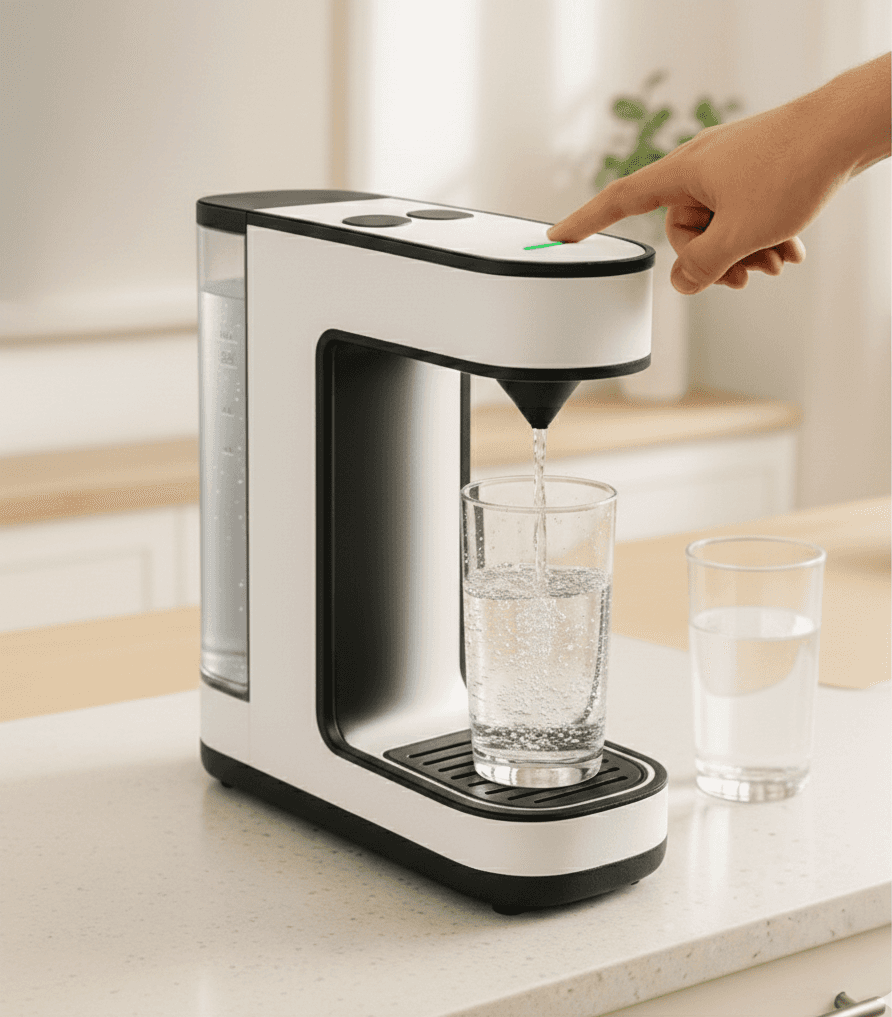
A human-centered redesign of a domestic water filter focused on ergonomics and everyday use.
UX Research
Conceptual Design
UI and Visual Design
3D Modelling
Marketing
Group Project | DEA 1150 | SP25
case.

Countertop water filters are widely used in homes, offices, and shared spaces. They solve a real problem - access to filtered drinking water without bottled waste - but most current systems are either function-heavy but visually disruptive or simply aesthetic but limited in filtration performance.
Despite being placed prominently on kitchen counters, these products are rarely designed as intentional objects. At the same time, bottled water consumption remains high due to convenience and perceived reliability, contributing to plastic waste and long-term cost.
There is an opportunity to rethink the countertop filtration system as both a functional appliance and a considered product.
design intent.
Most countertop filters prioritize function but neglect presence. They are bulky, visually disruptive, and mechanically uninspired.
Osmis was designed to:
Reduce reliance on single-use bottled water
Improve filtration performance
Integrate seamlessly into a range of kitchen aesthetics
Refine interaction through clearer, more intuitive features
The product aims to be both a daily utility and a considered object.
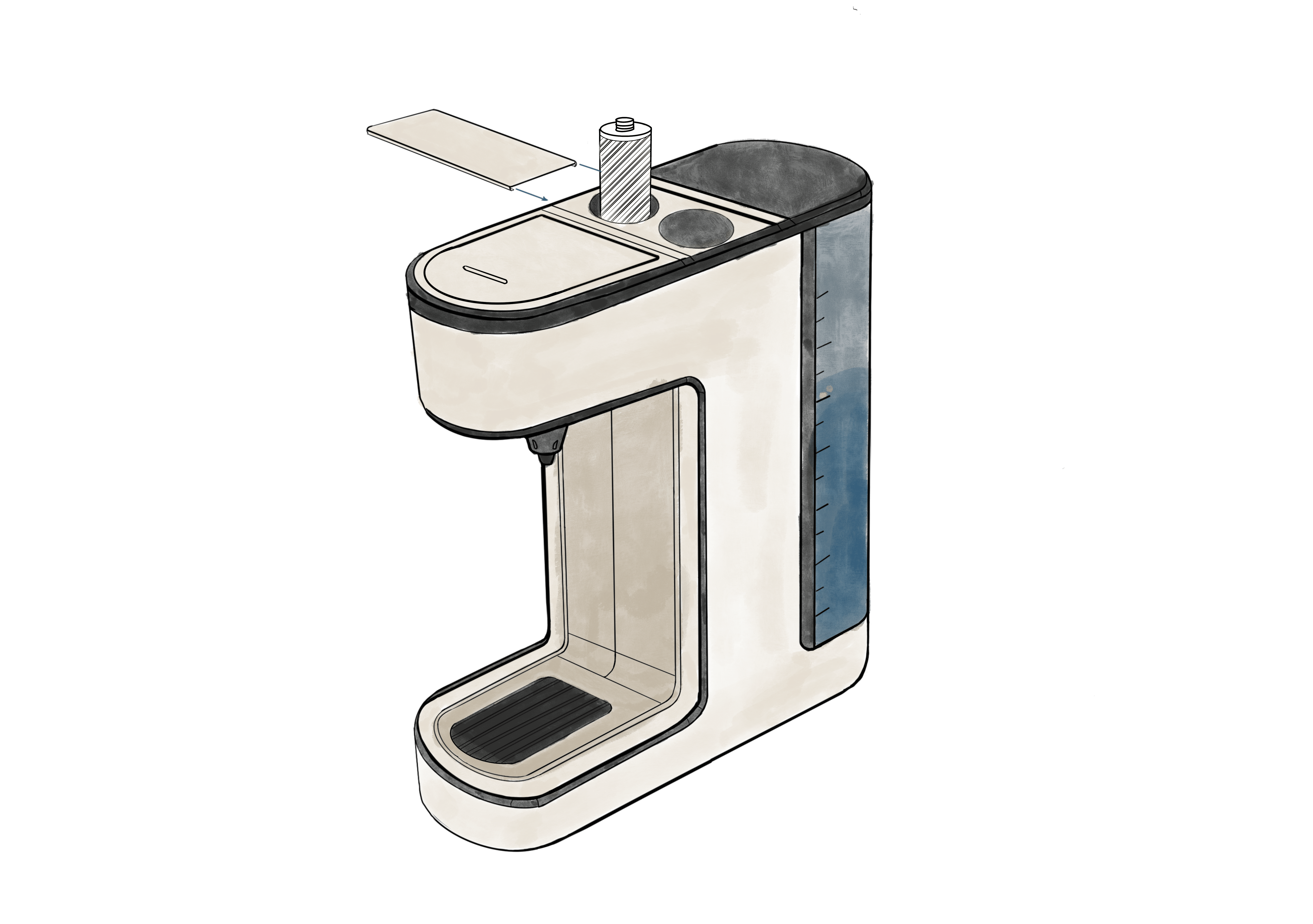
ideation.
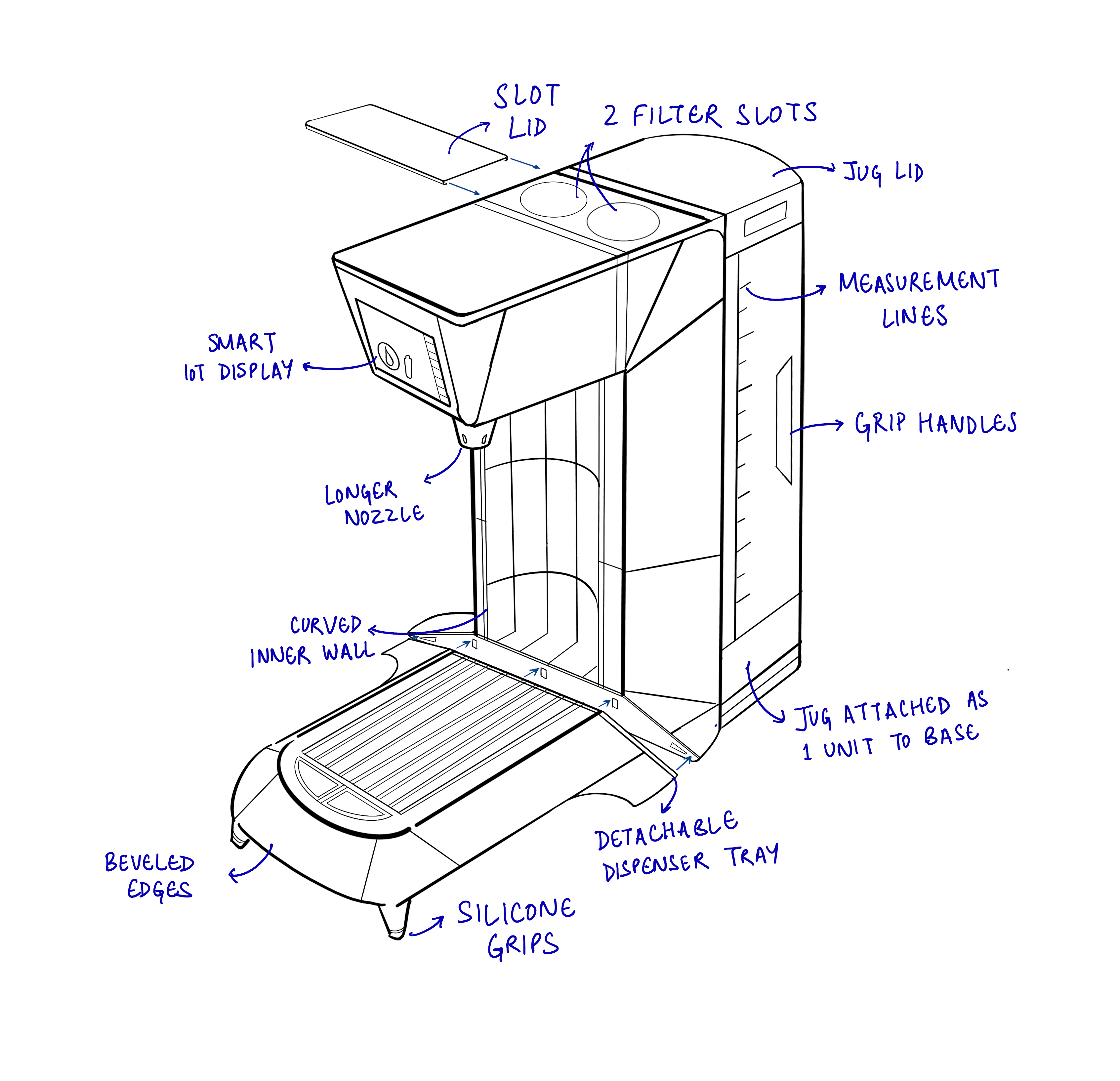
The first iteration leaned into a feature-forward approach. It incorporated visible dual filter slots, grip handles, measurement lines, a longer nozzle, and a detachable tray, along with a more expressive front display. While functionally ambitious, this version felt visually heavy and mechanically layered, emphasizing capability over cohesion.
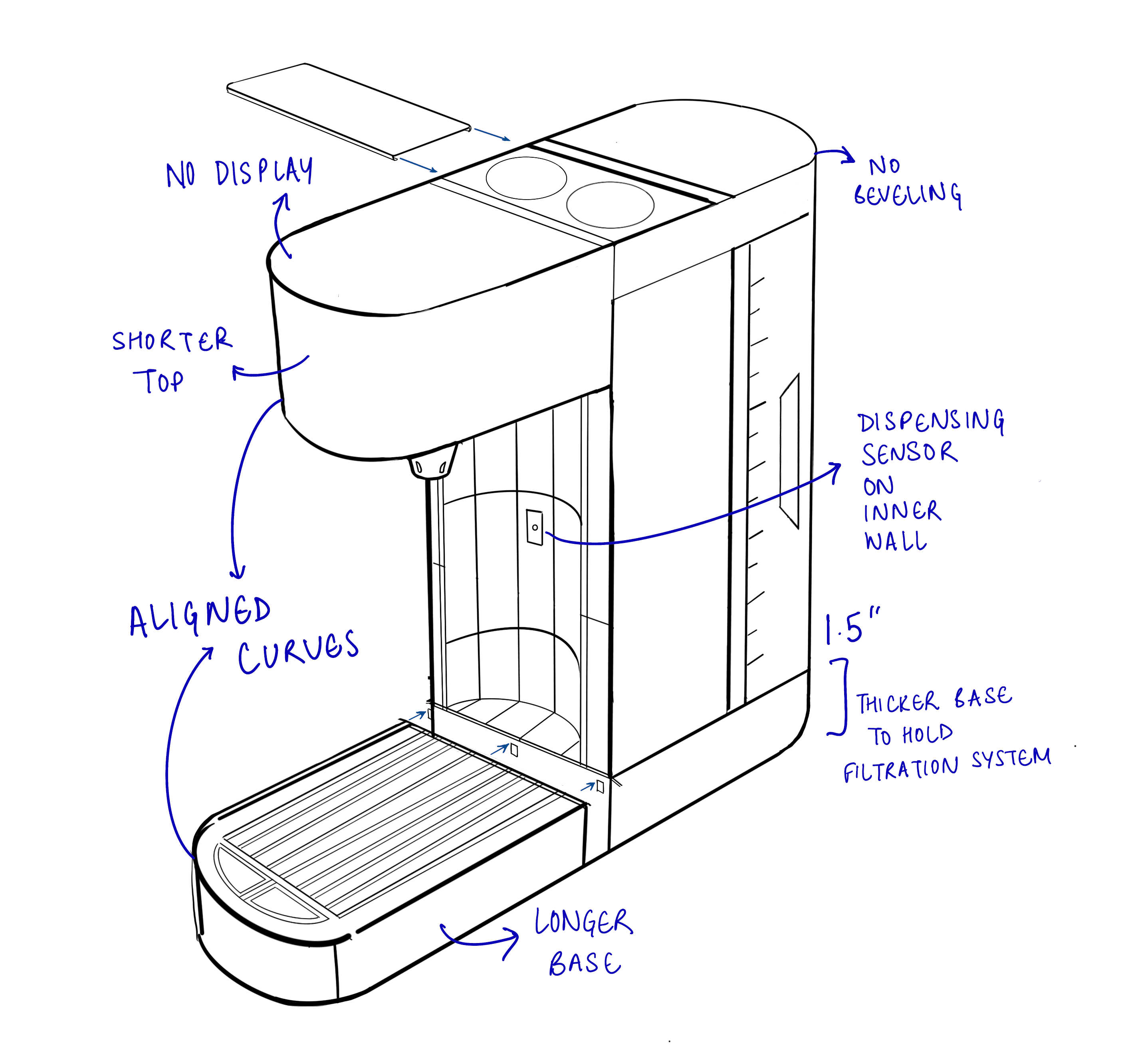
The second direction reduced surface complexity and streamlined the overall massing. The top profile was shortened, curves were aligned, and the base was thickened to structurally house the filtration system. By removing certain external elements and integrating components more tightly into the body, the design gained clarity, though it still carried noticeable bulk.
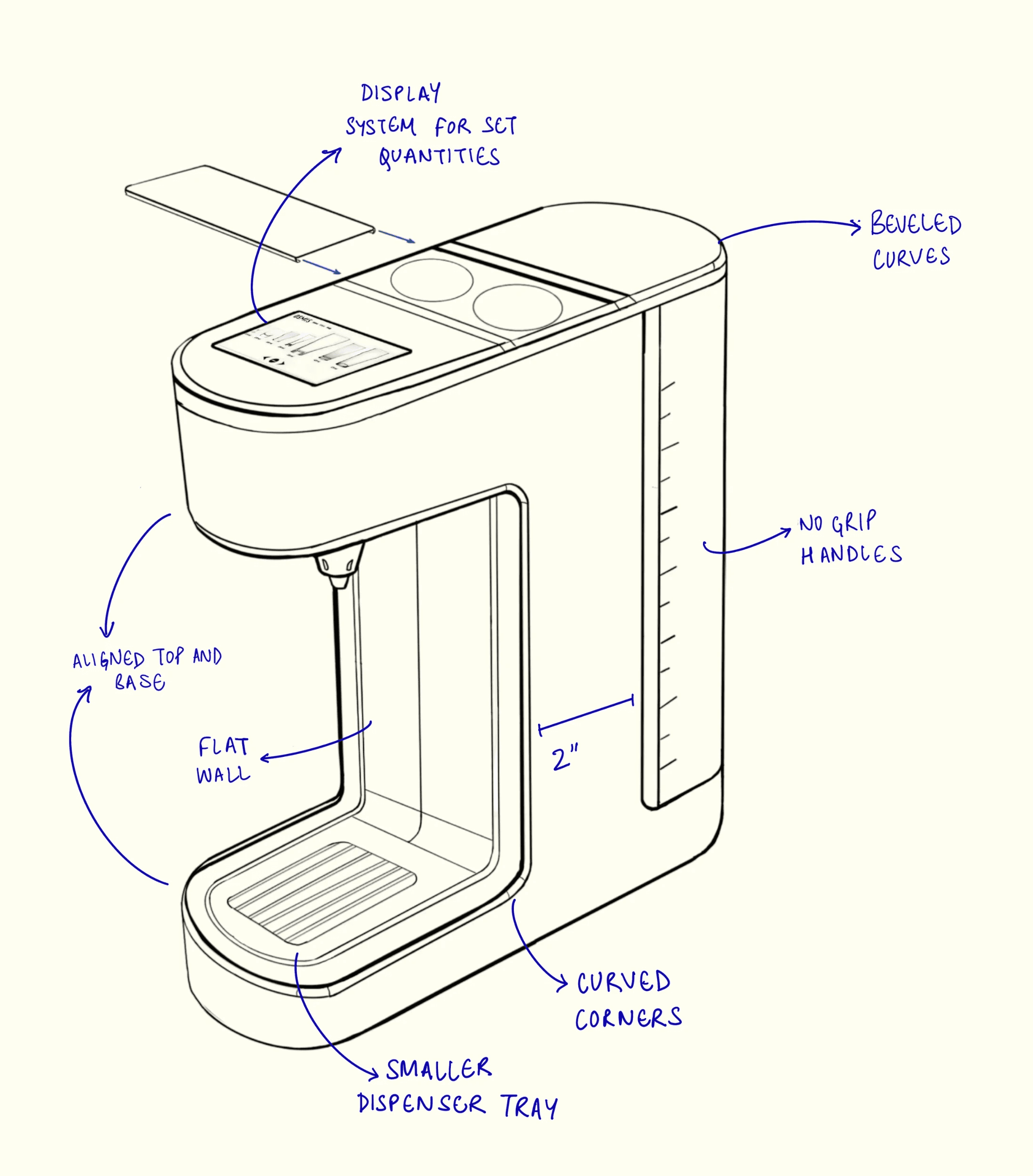
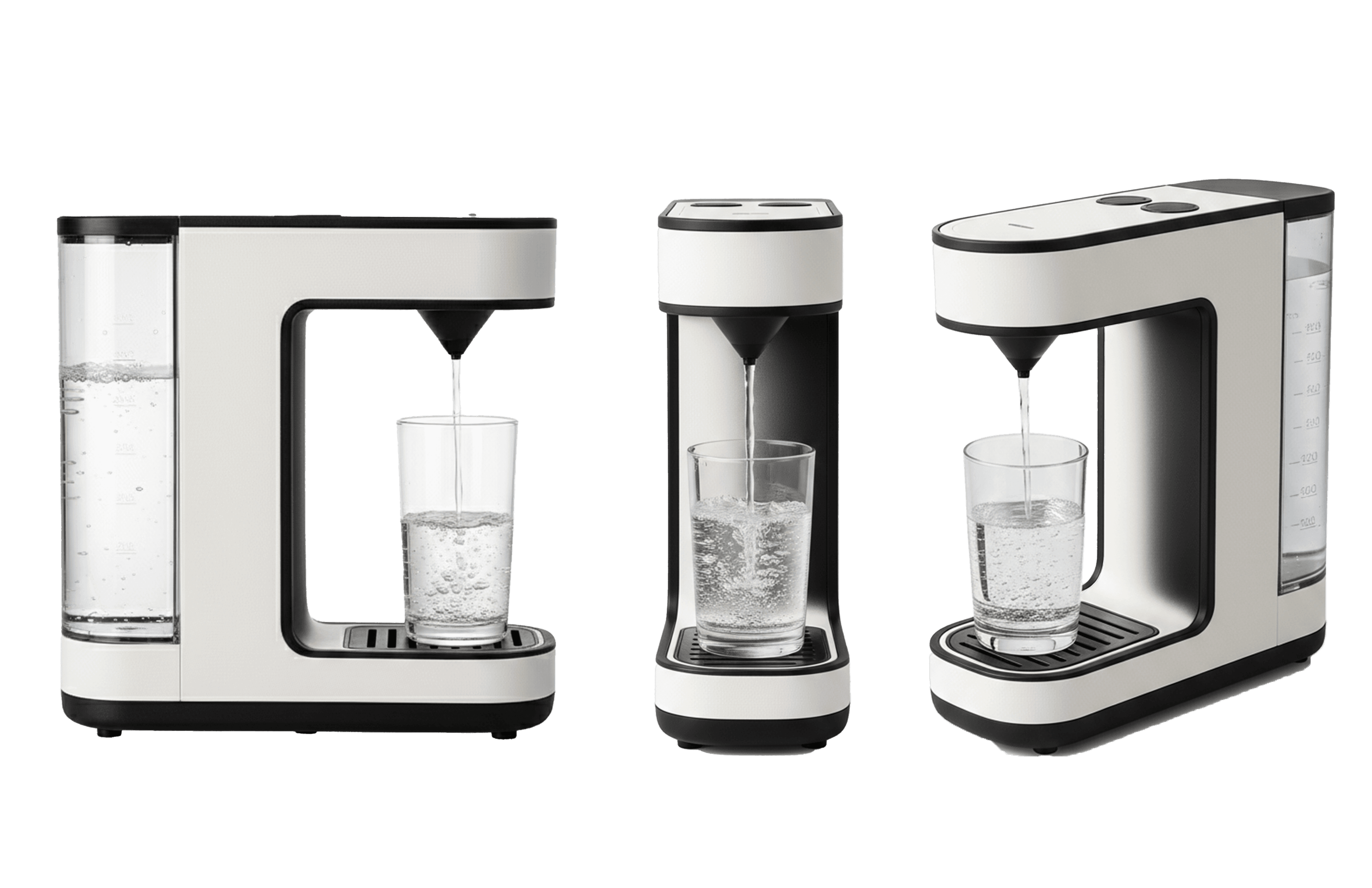
The third and final iteration focused on refinement and restraint. External handles were eliminated, the geometry of the top and base were aligned, and the dispensing cavity was simplified for visual continuity. The dispenser tray was reduced in scale, corners were softened, and proportions were tightened to decrease overall visual weight.
feature improvements.
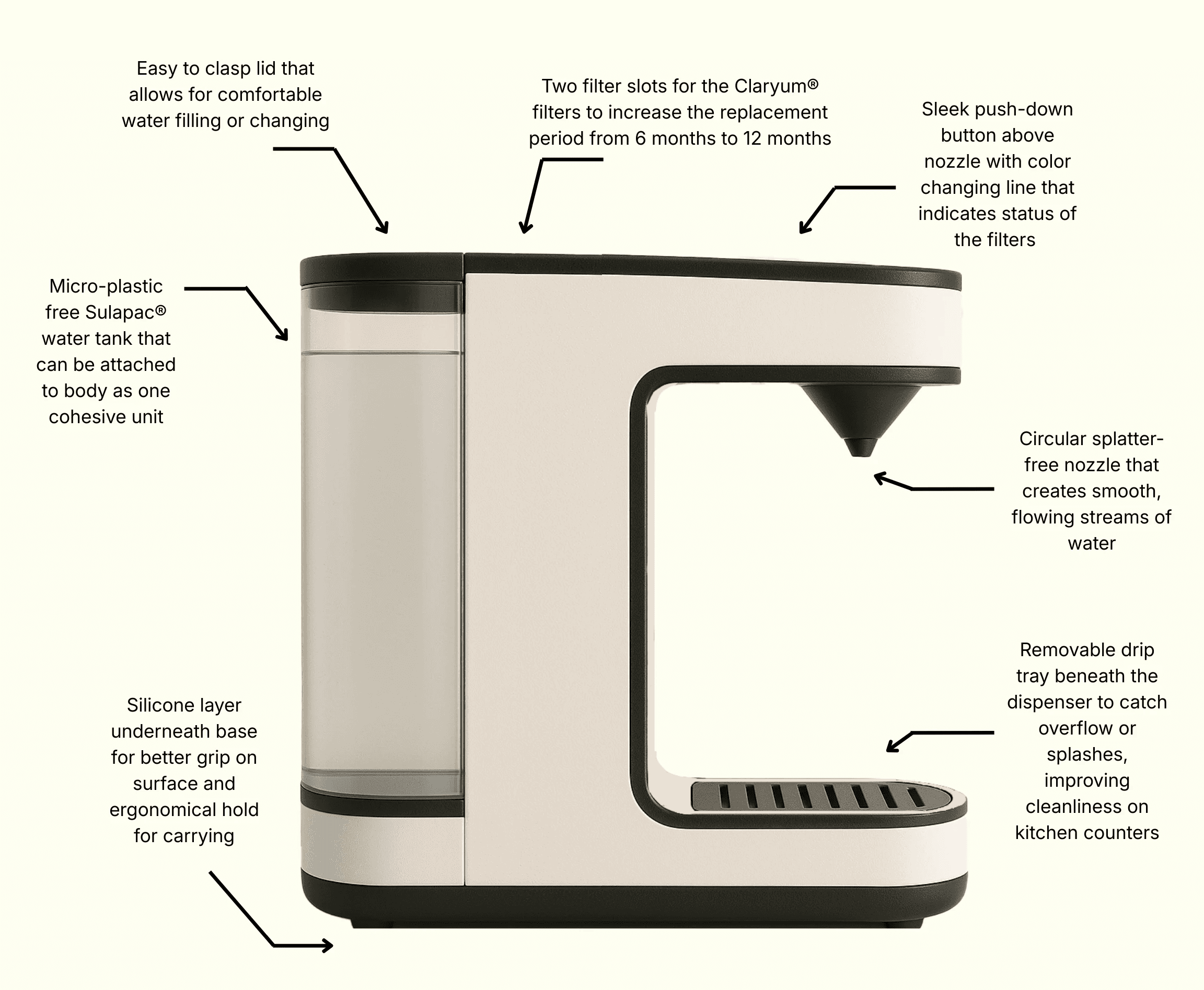
Osmis is a compact, triple-layer countertop filtration system designed for everyday visibility and performance. It combines:
A minimal footprint
Dual-filter configuration
Integrated status indication
Refined interaction points
Structured, modern form language
The system is designed to feel stable, intentional, and durable to be positioned as a permanent appliance rather than a temporary add-on.
CMF palette.
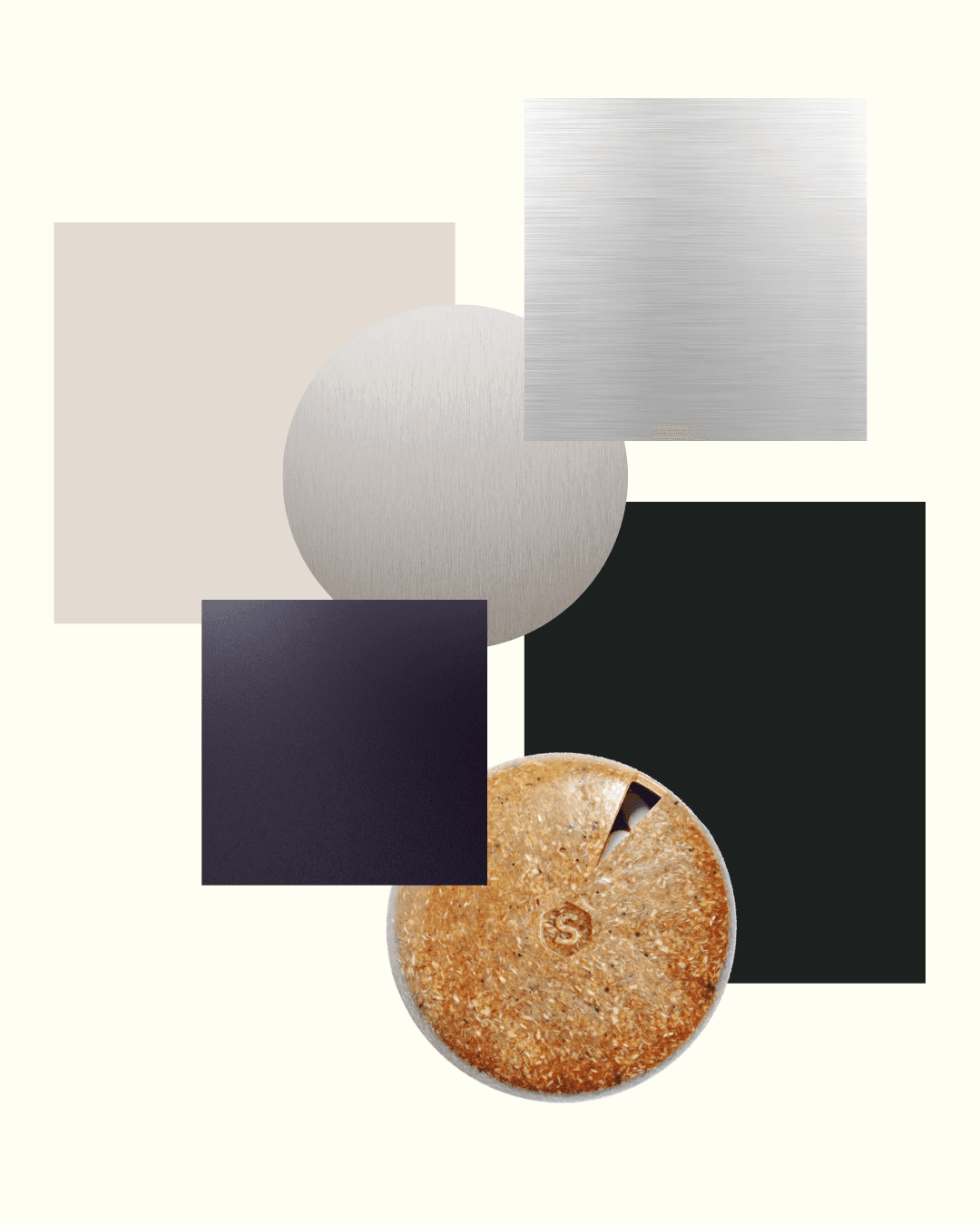
Osmis was developed with a restrained material and finish palette:
Off-white primary body
Charcoal accent elements
Stainless steel components
Soft-touch and semi-gloss finishes
To address environmental impact, select plastic components incorporate Sulapac’s biodegradable coating, a bio-based material derived from wood and plant fibers. This coating allows the product to maintain the structural strength and durability of conventional plastic while significantly reducing long-term environmental impact. Unlike traditional petroleum-based plastics, Sulapac’s material is designed to break down safely at the end of its lifecycle and minimizes the release of harmful microplastics.
final design.
Osmis reframes the countertop water filter as a refined, long-term appliance rather than a temporary solution. Through structural refinement, extended filtration cycles, and cohesive form development, the design balances performance, clarity, and visual integration.
reflection.
I learnt to see performance, usability, and sustainability as interconnected design decisions rather than separate layers.