INDUSTRY:
PRODUCT DESIGN
TIMELINE:
SEPT - DEC 2025
EXPERIENCE:
ITERATIVE PROTOTYPING
SOFTWARE:




boond
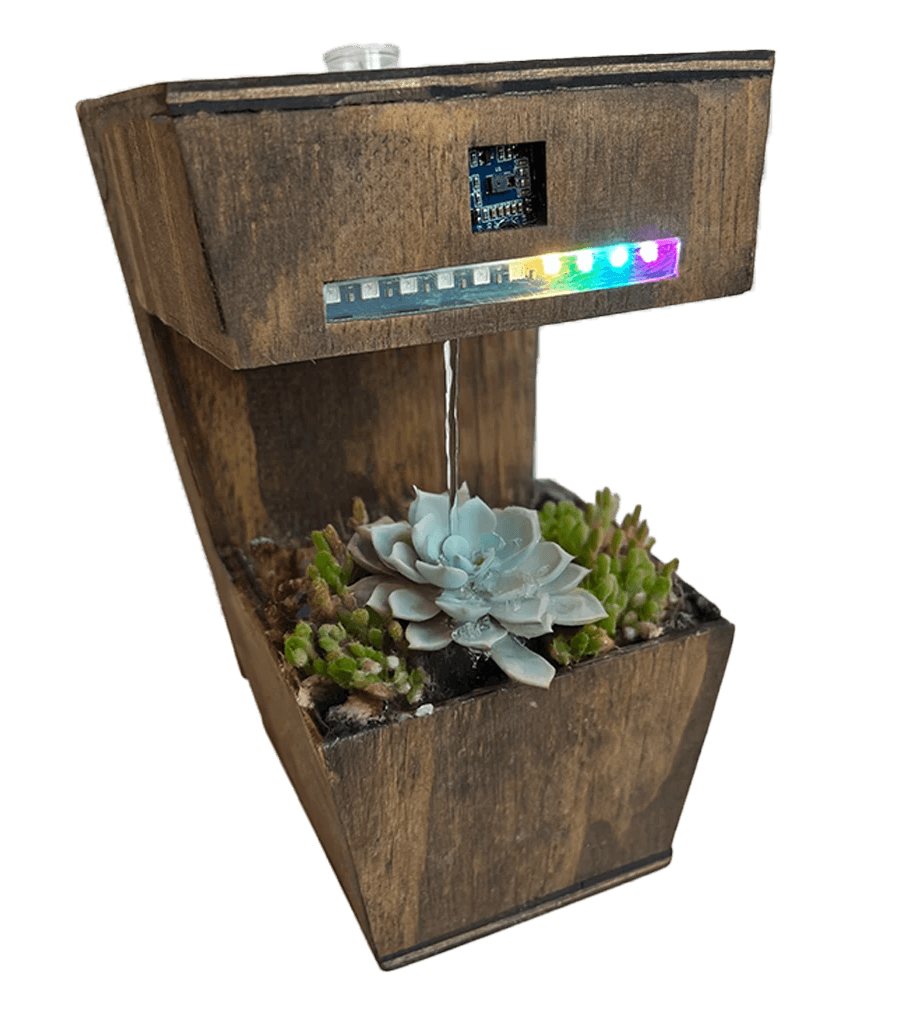
A gesture-responsive hydration companion designed to embed care and connection into everyday rituals.
Arduino and Sensors
Interaction Mapping
Physical Prototyping
UX Research Methods
Woodwork
UI and Visual Design
Individual Project | DEA 2730 | FA25
case.
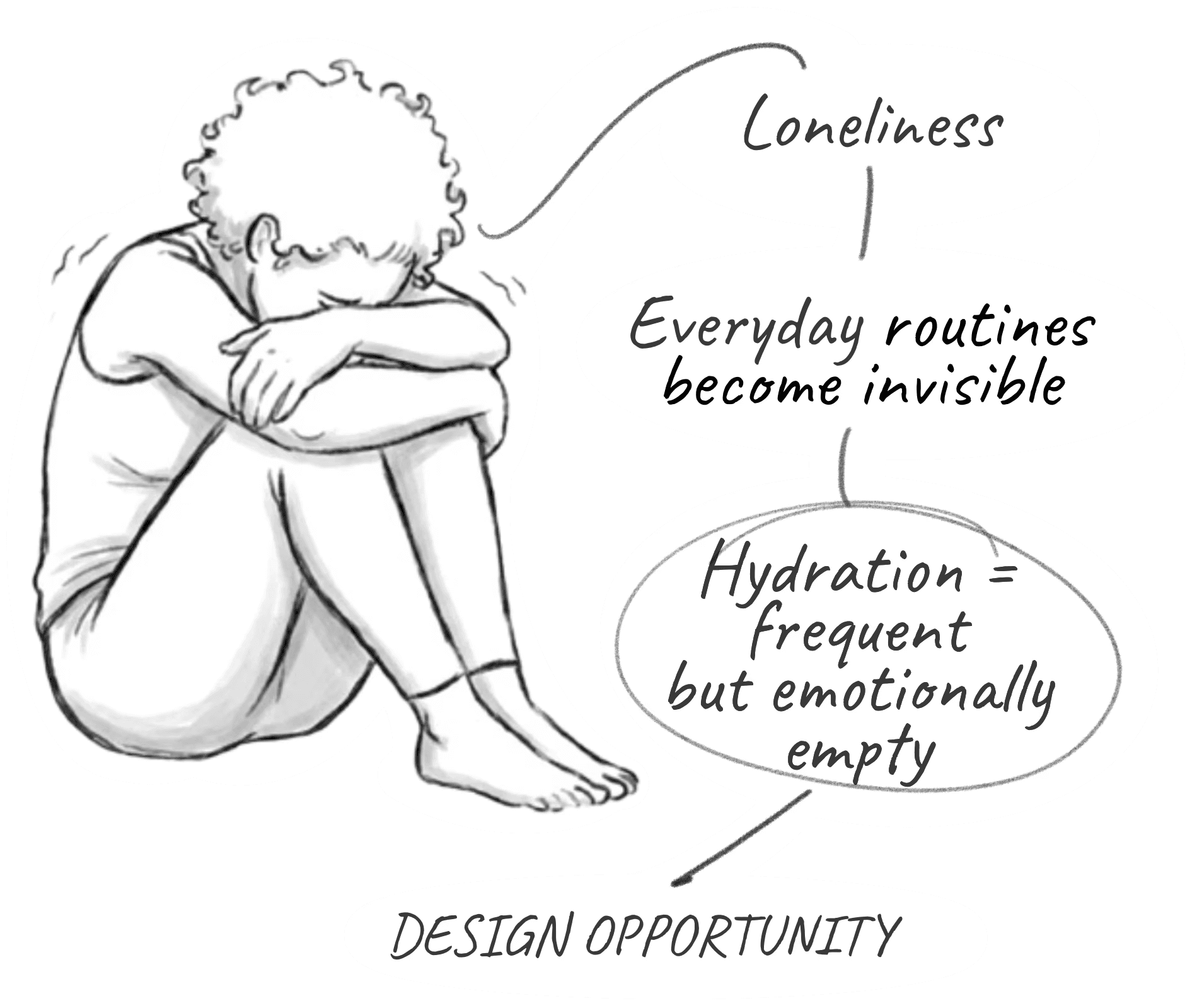
Loneliness often reveals itself in ordinary routines. Nearly 1 in 3 adults feel lonely at least once a week. Everyday rituals like drinking water – frequent, repetitive, and usually unnoticed - become moments where connection feels absent. In my family, hiccups were seen as a sign that someone was thinking of you. This small superstition shaped how I understood connection, and it became the foundation of my design problem: How might I transform ordinary hydration into a moment of care between people who care about each other?
The challenge was to create a device that:
Felt emotionally present without being intrusive
Was intuitive and dependable in everyday use
Built trust through clear, unambiguous feedback
design intent.

boond was designed as a gesture-responsive device that sits atop a water filter, transforming the act of drinking water into a small, emotionally meaningful ritual.
The project prioritizes:
Emotional clarity: users should immediately understand when the device is responding to them
Dependable interaction: gestures must feel intentional, not accidental
Subtle presence: the experience should feel calm, ambient, and optional
research.
To ground the design in real behavior and emotional needs, I conducted a series of qualitative research activities:
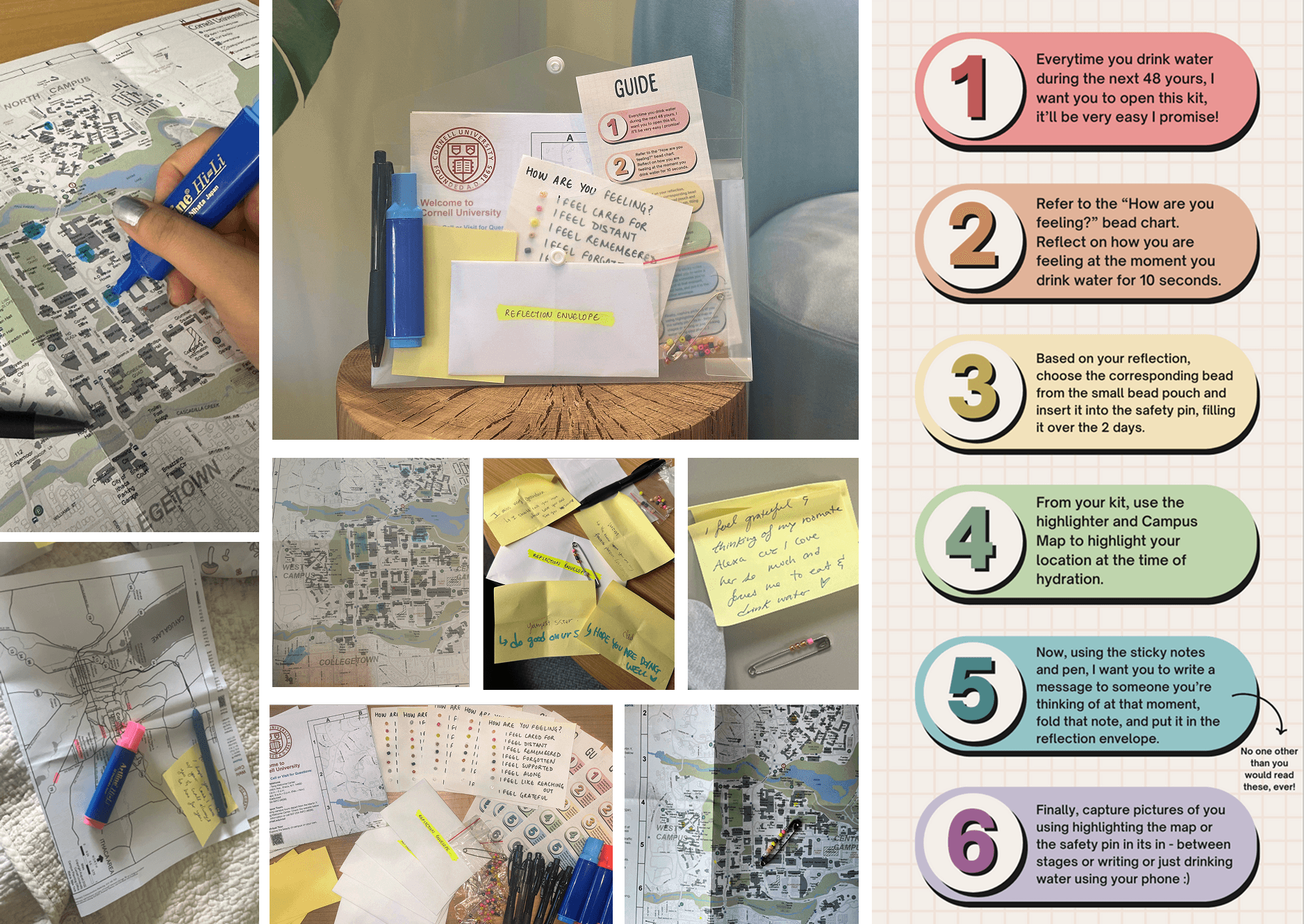
Cultural probes to understand hydration habits and personal rituals
Hydration often happens in quiet, transitional moments rather than social settings
Users associated care with with intentional pauses
Small, repeated rituals held more emotional meaning than occasional grand gestures
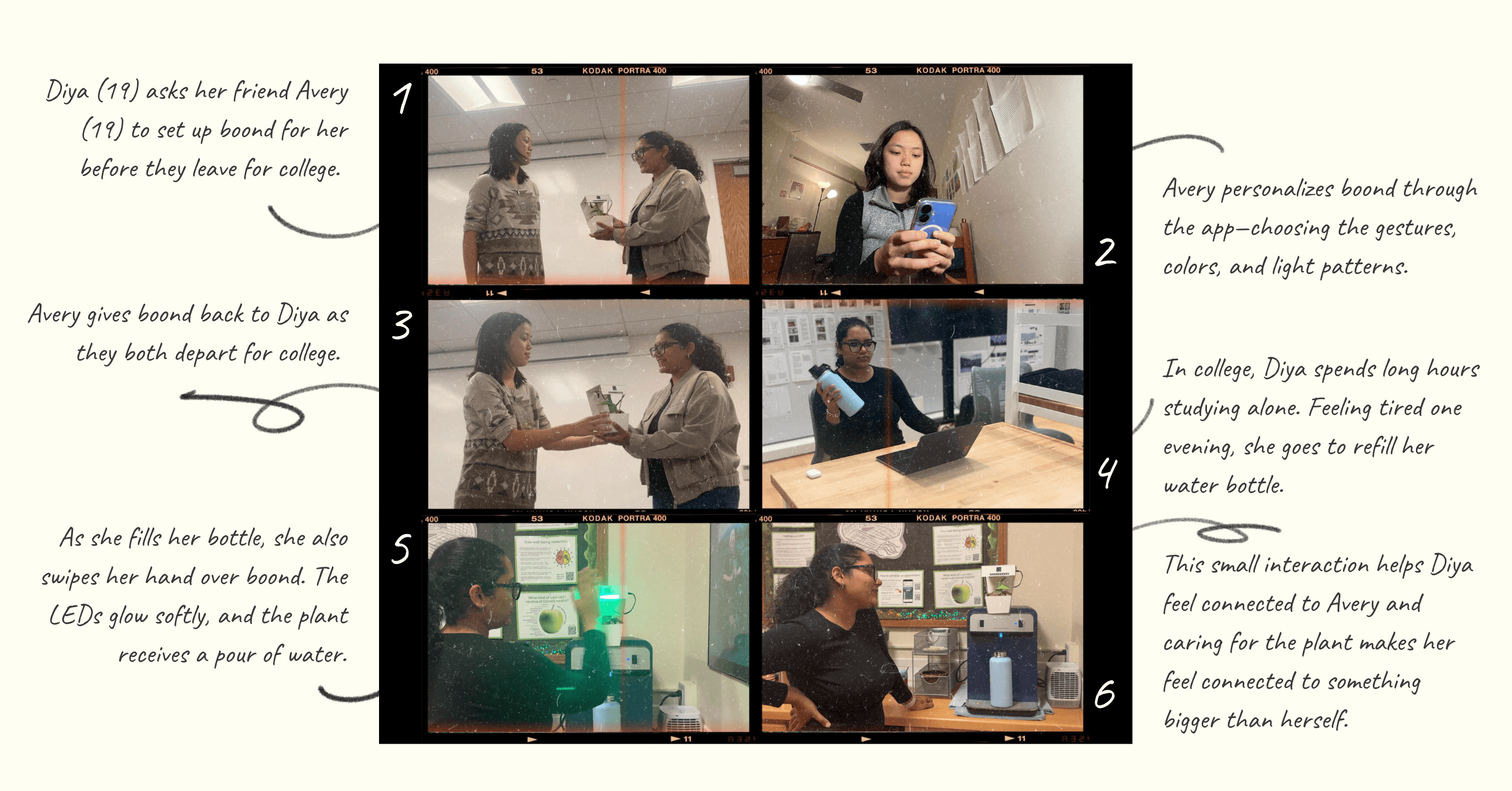
Scenario-based testing to explore use case, personalization, and long-term use
Emotional value was amplified when the sender could encode meaning into the interaction
Users preferred open-ended personalization and minimal explanation over prescriptive instructions
User experience testing focused on intuitiveness, gesture discovery, and emotional response during interaction
Subtle, ambient feedback was preferred over explicit alerts
When gesture recognition felt inconsistent, trust dropped quickly
Clear confirmation of activation was critical
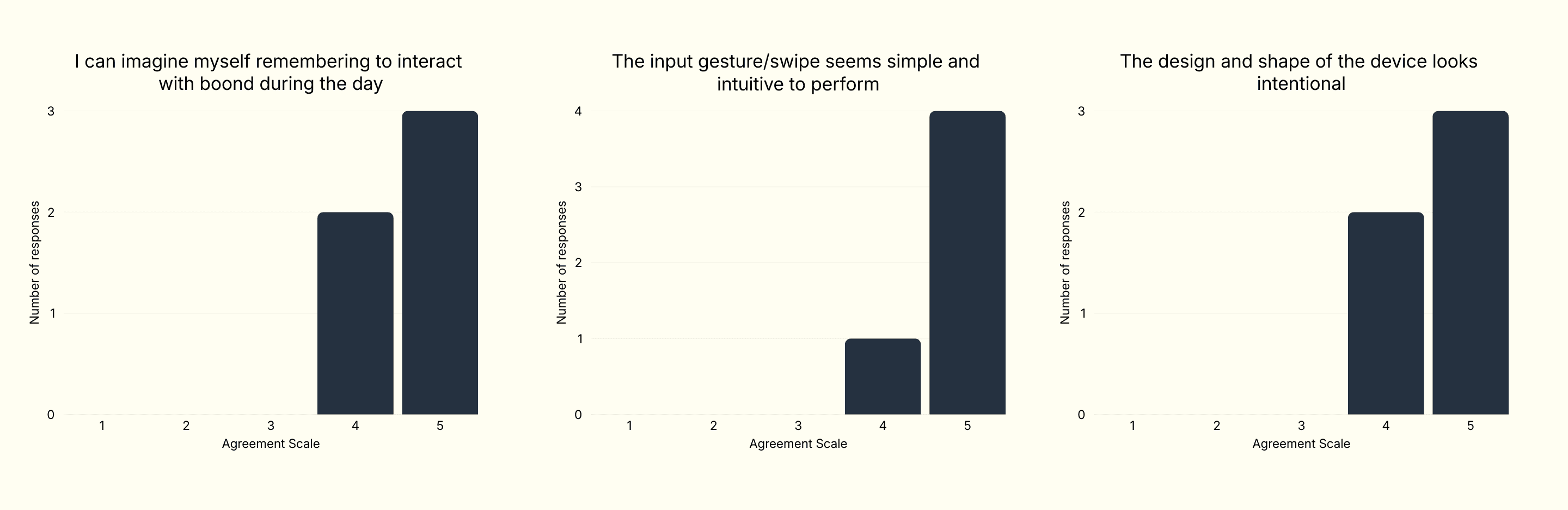
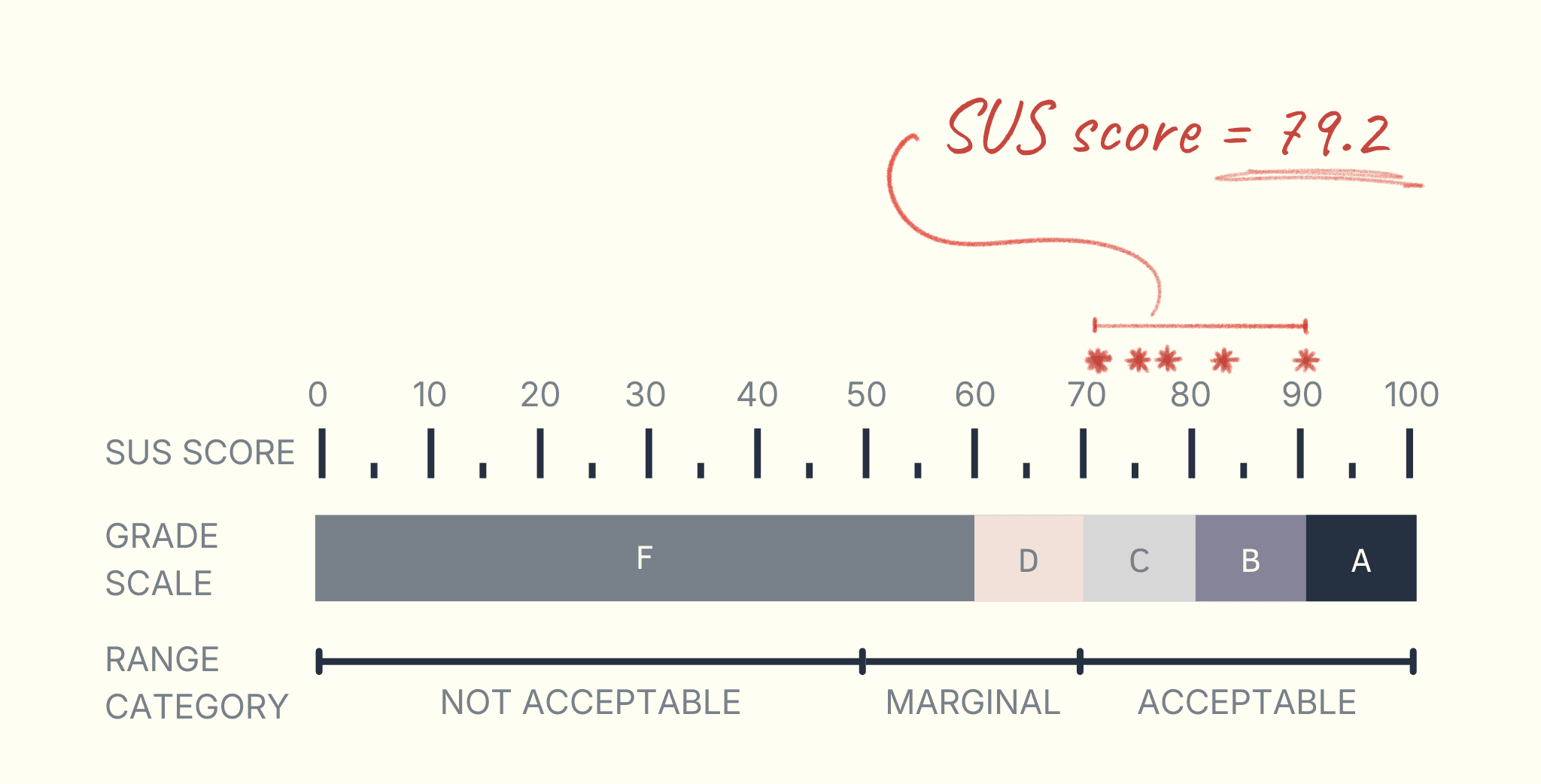
System Usability Scale (SUS) assessments to validate usability
The system scored high on perceived ease of use
Users described the experience as calming rather than effortful
Reliability mattered more to users than feature richness
iterative process.
Prototype 1:
Tested basic gesture sensing and LED response
Revealed issues with accidental activation and unclear feedback
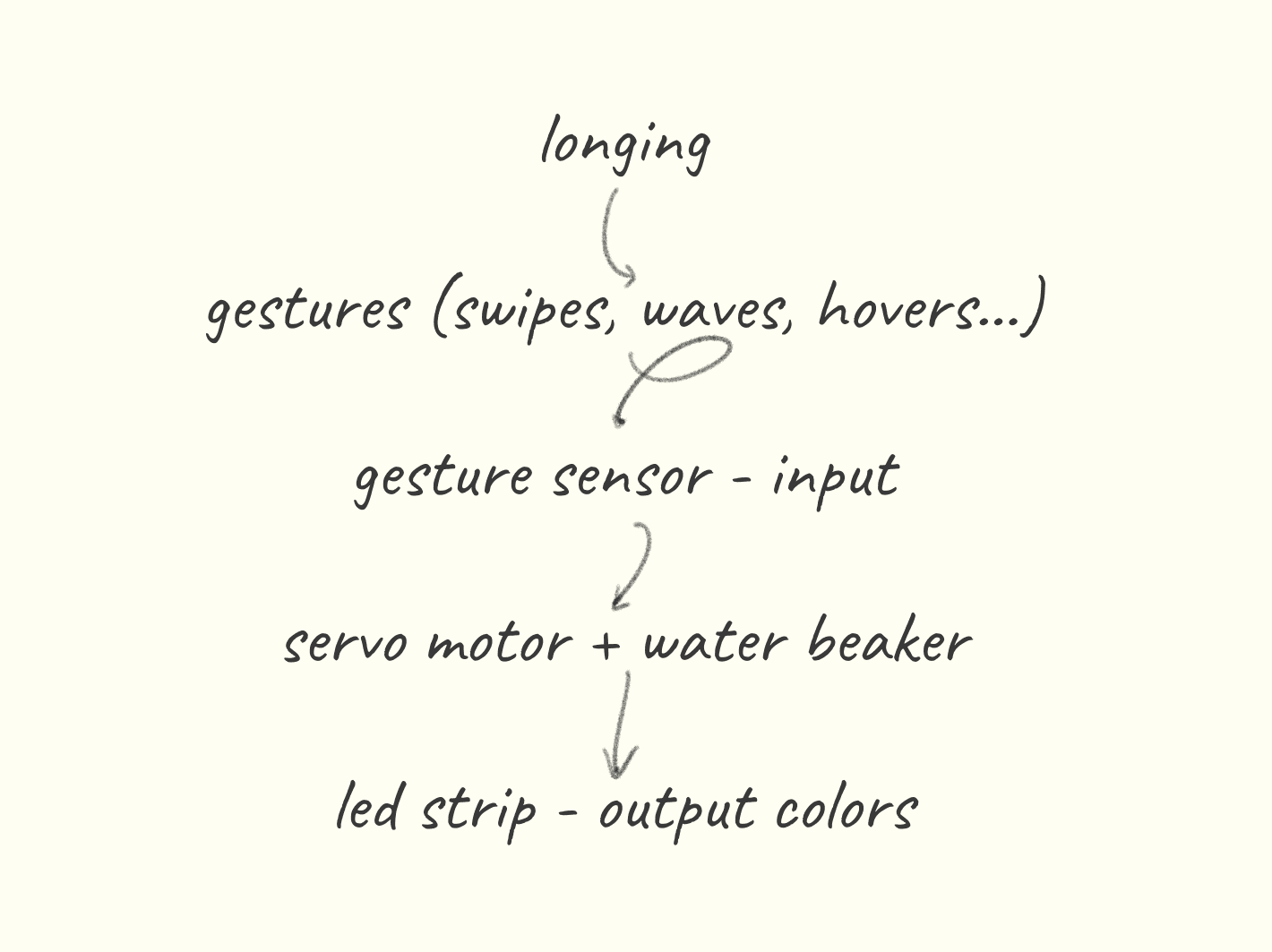
Prototype 2:
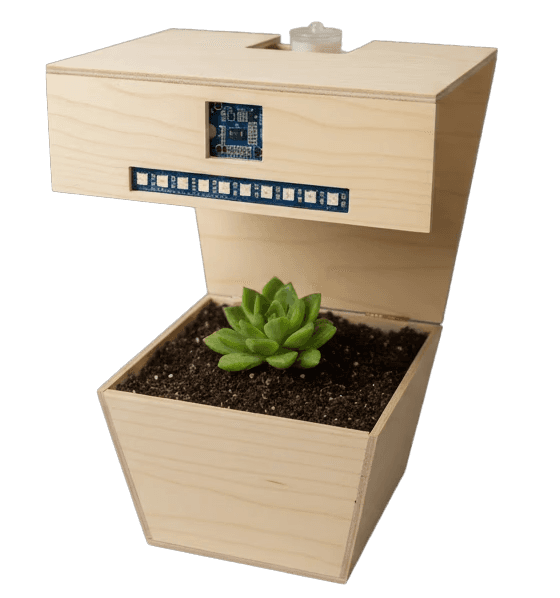
Improved sensor placement and enclosure
Introduced clearer gesture-to-light mapping
Users requested stronger confirmation of activation
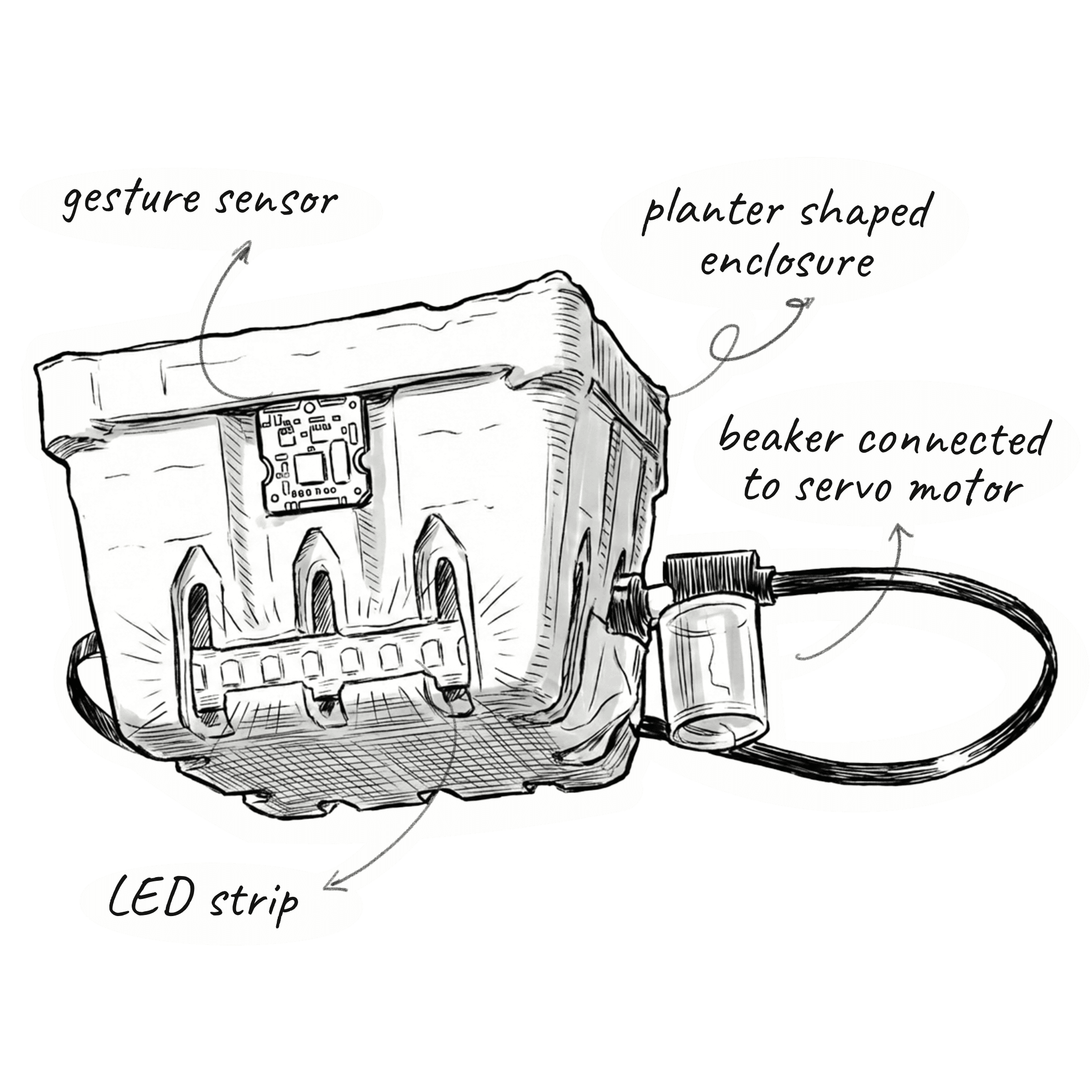
Prototype 3:
Refined gesture accuracy and LED animations
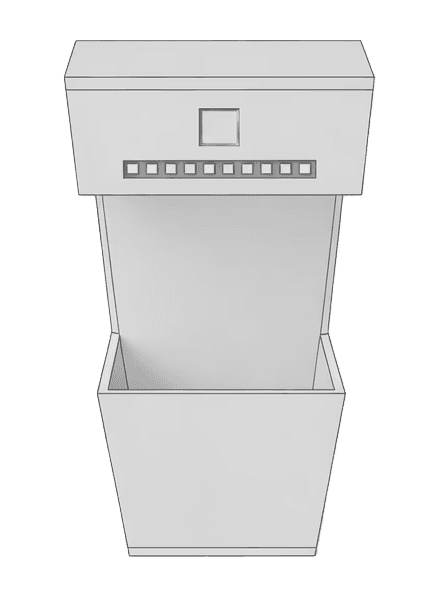
Integrated planter structure to soften the technological presence and generated CAD and low-fidelity models
Supported more intentional, repeatable interactions
final design.
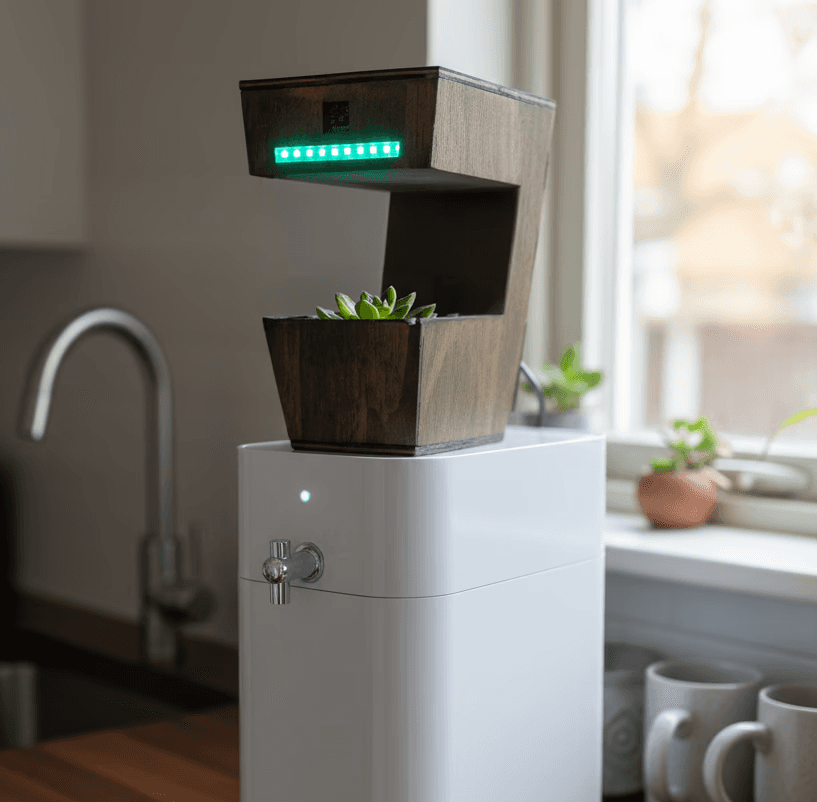
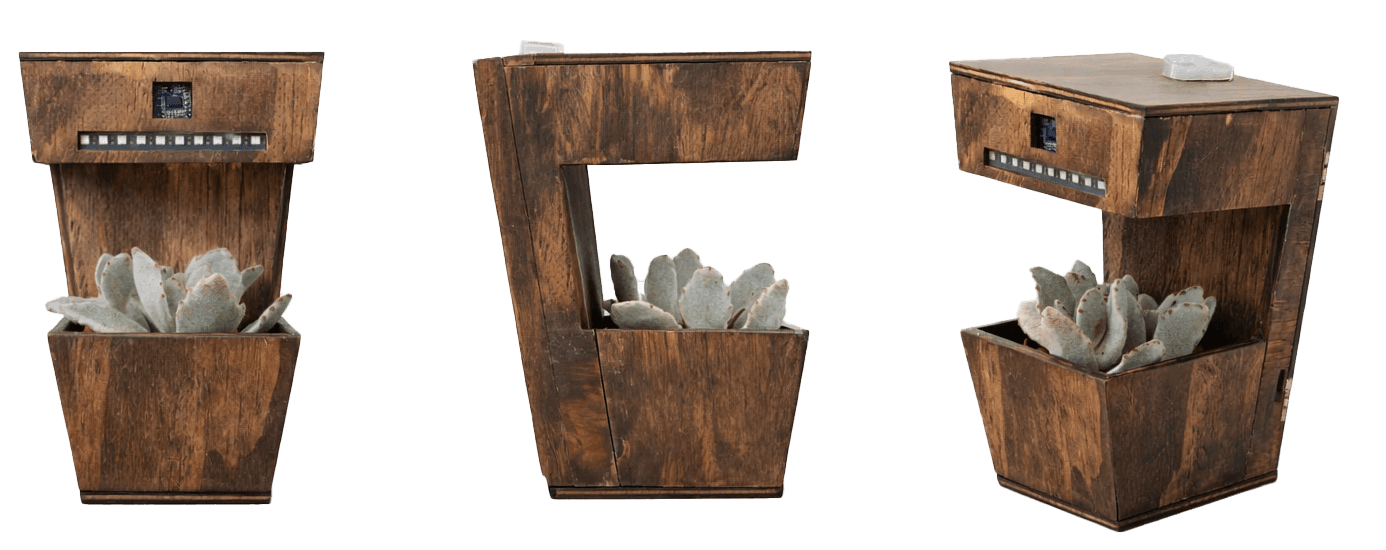
boond's final design integrates interaction logic, physical form, and system feedback into a cohesive, emotionally legible experience.
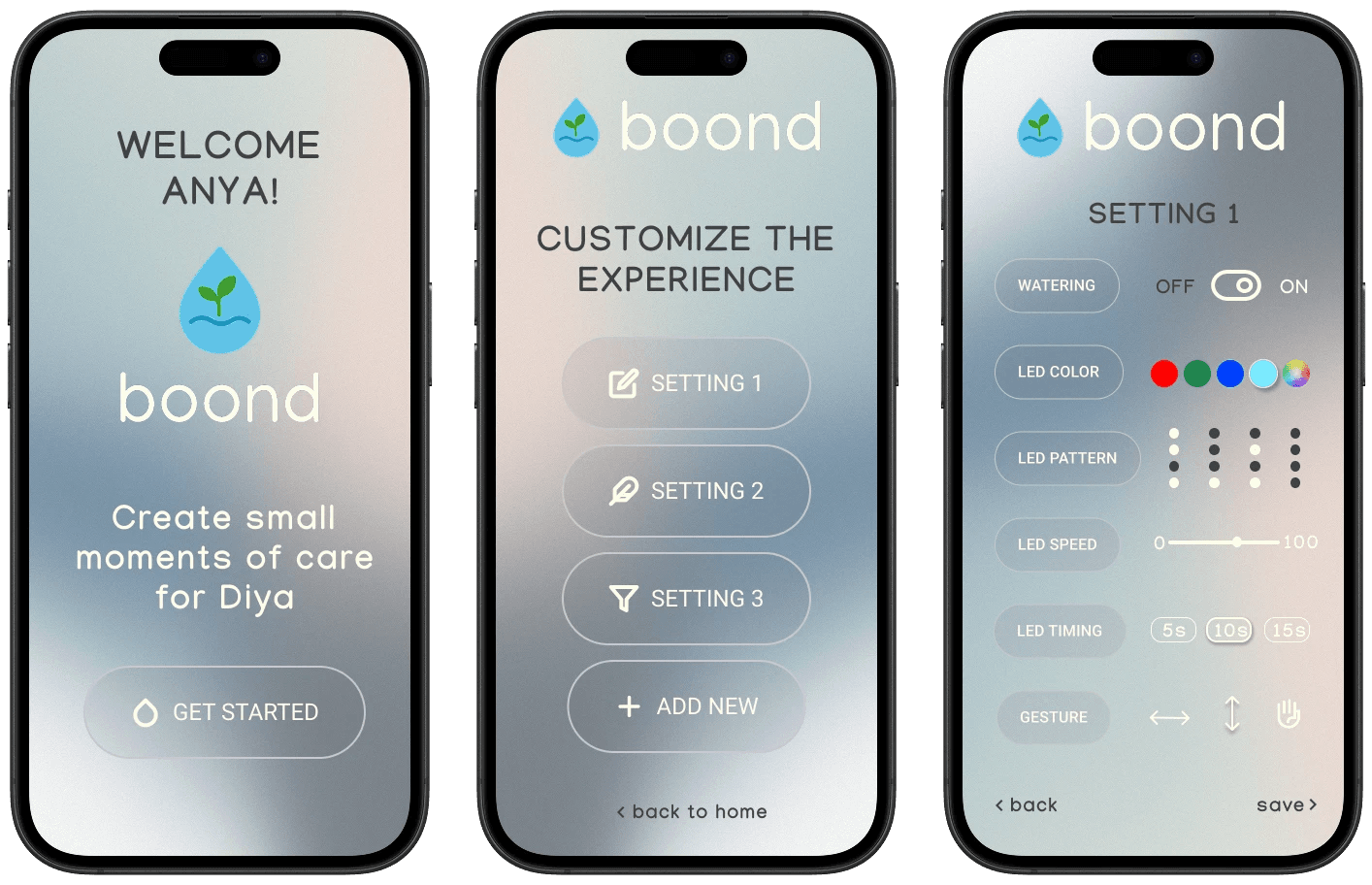
boond is designed to be given from one person to another. A sender personalizes gestures, colors, and meanings through the mobile app before gifting the device. When the recipient fills their water bottle, they interact with boond using simple hand gestures. The device recognizes the gesture, confirms it through light, and dispenses water onto the built-in plant, turning a routine action into a small moment of care.
The interaction resets automatically, allowing the ritual to repeat consistently without instruction or adjustment. The closed-loop interaction prioritizes dependability, ensuring users trust the system through repeated everyday use.
The accompanying mobile app extends the experience by allowing users to personalize gestures, colors, and meanings - particularly when boond is given to a close one. App screens and flows were designed in Figma for functional simplicity.
Three interaction modes were designed to accommodate different contexts, balancing automation with user control. These modes were first explored through low-fidelity sketches and interaction diagrams, then validated through scenario testing.
Physically, the final prototype brings together refined gesture detection, adjustable LED animations, and a structured and cohesive planter enclosure. The enclosure was developed through iterative CAD exploration in Rhino, while rapid physical prototyping supported testing sensor placement, enclosure proportions, and interaction ergonomics. The form is intentionally restrained, allowing the interaction and emotional experience to remain central rather than performative.

MODE 1
Swipe right/left
Fast LEDs
Fast pour
Soothing color
MODE 2
Swipe up/down
Slow LEDs
Slow pour
Soothing color
MODE 3
Hover/push/pull
LED loop
No pour
Rainow colors
reflection.
This project reinforced for me that emotional design does not require complexity. Trust emerges when form is intentional and interactions are dependable.