INDUSTRY:
INTERIOR DESIGN
TIMELINE:
FEB - MARCH 2025
EXPERIENCE:
SPACE RENDERING
SOFTWARE:




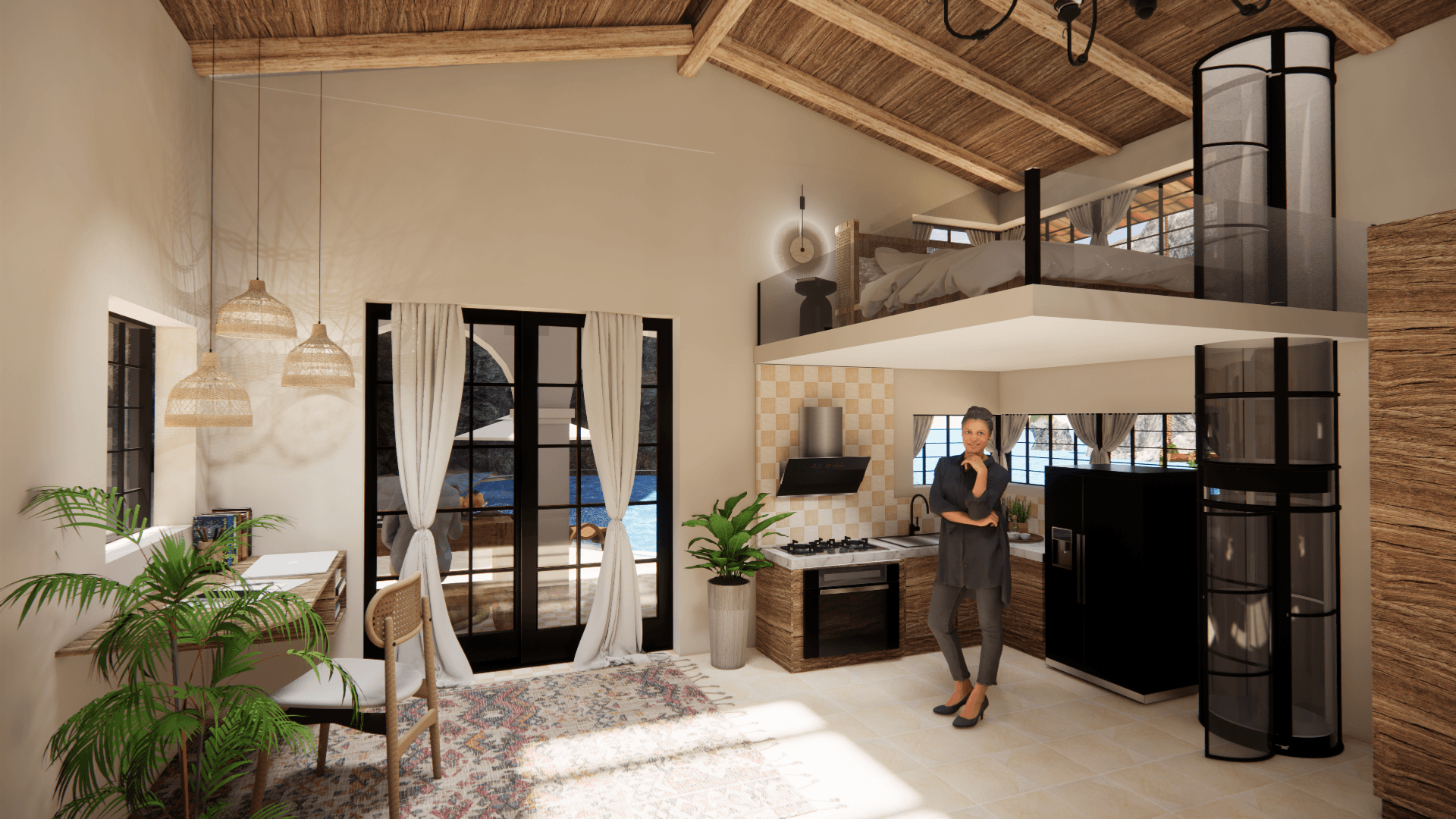
A luxury, aging-in-place tiny house designed to support independence, accessibility, and lifelong well-being within a nature-integrated coastal setting.
Residential Spatial Design
User-Centered Space Planning
3D Modeling & Rendering
Accessibility Strategy
Visual Communication
Individual Project | DEA 1150 | SP25
case.
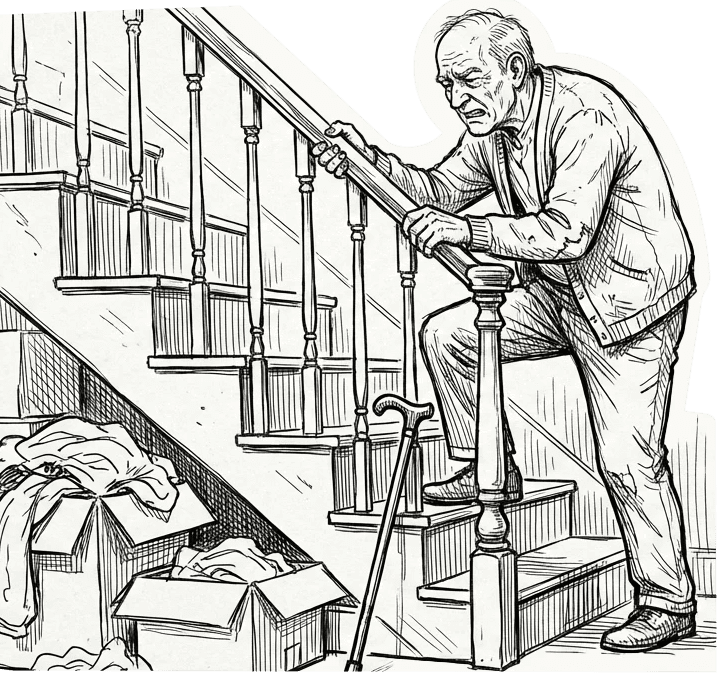
As people age, homes often become limiting rather than empowering. Traditional residential design rarely anticipates long-term mobility shifts, sensory changes, or evolving physical needs - especially within compact spaces. Tiny homes, however, are often positioned as purely economical or minimalist solutions. But reduced square footage does not have to mean reduced experience.
The challenge was to design a luxury tiny house that operates within strict spatial limits while maintaining comfort, clarity, and elevated material quality. The project explores how thoughtful spatial planning can transform constraint into refinement.
design intent.
Casa Solstice is designed for a 75-year-old retired sustainable social innovator (me!) and her dog, whose life is shaped by creativity, tranquility, and connection to nature.
The intent was to create a compact home that:
Enables aging in place without compromise
Eliminates physical strain through strategic accessibility
Supports circadian rhythm and sensory comfort
Encourages daily connection to landscape
Reflects a lifelong commitment to environmental stewardship
spatial strategy.
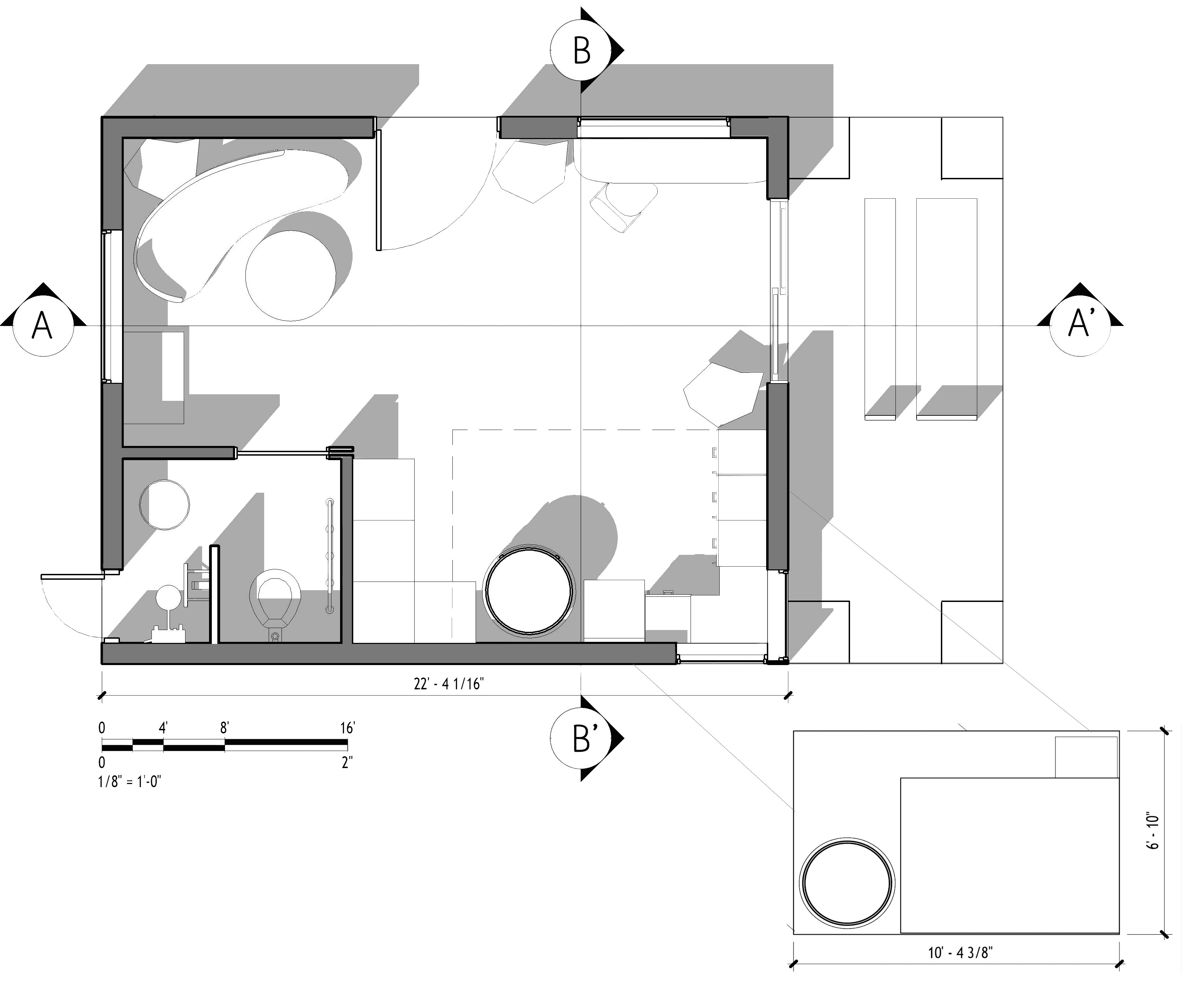
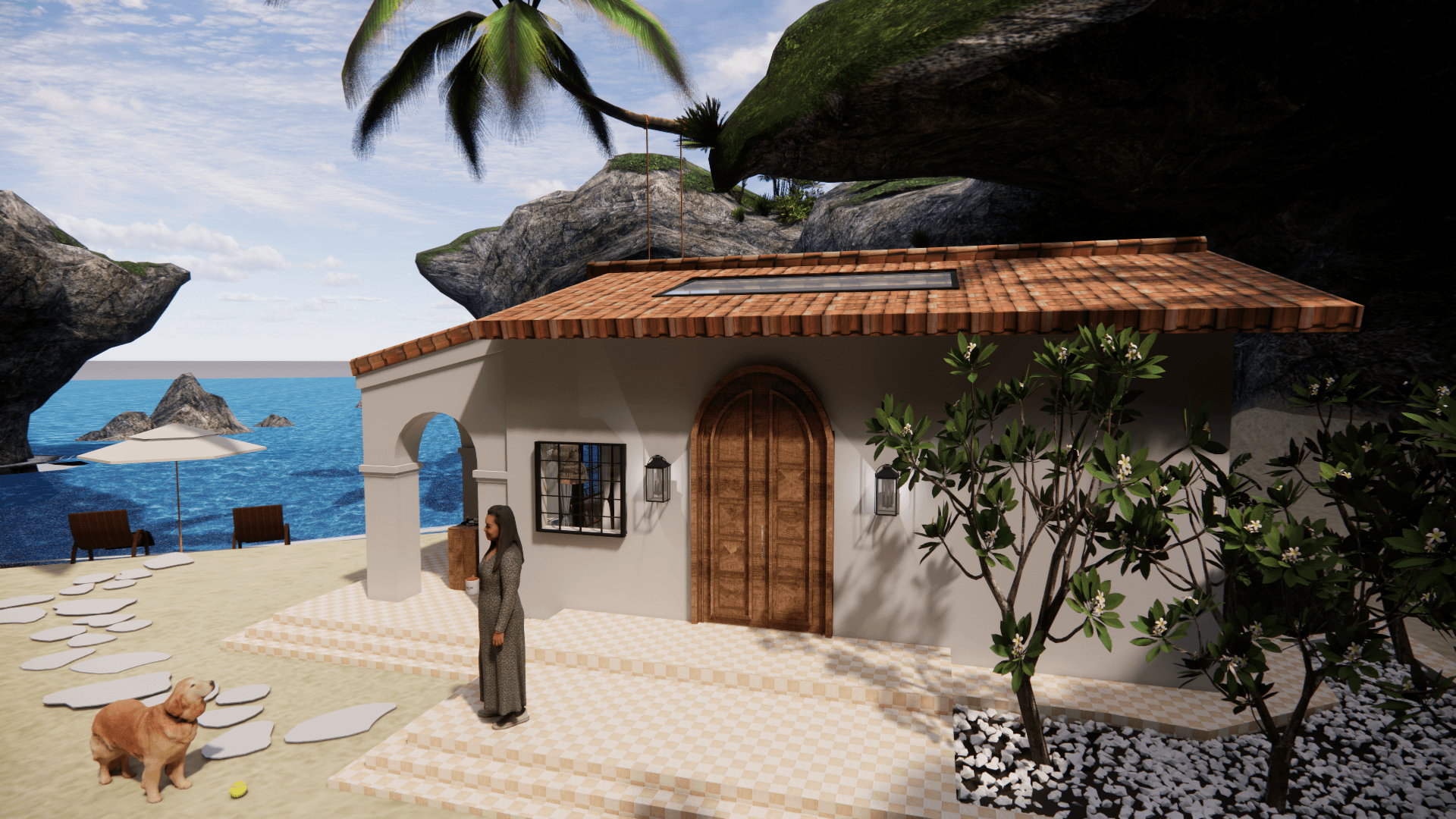
Despite its small footprint, Casa Solstice is organized to feel expansive through vertical layering, open sightlines, and seamless indoor-outdoor flow.
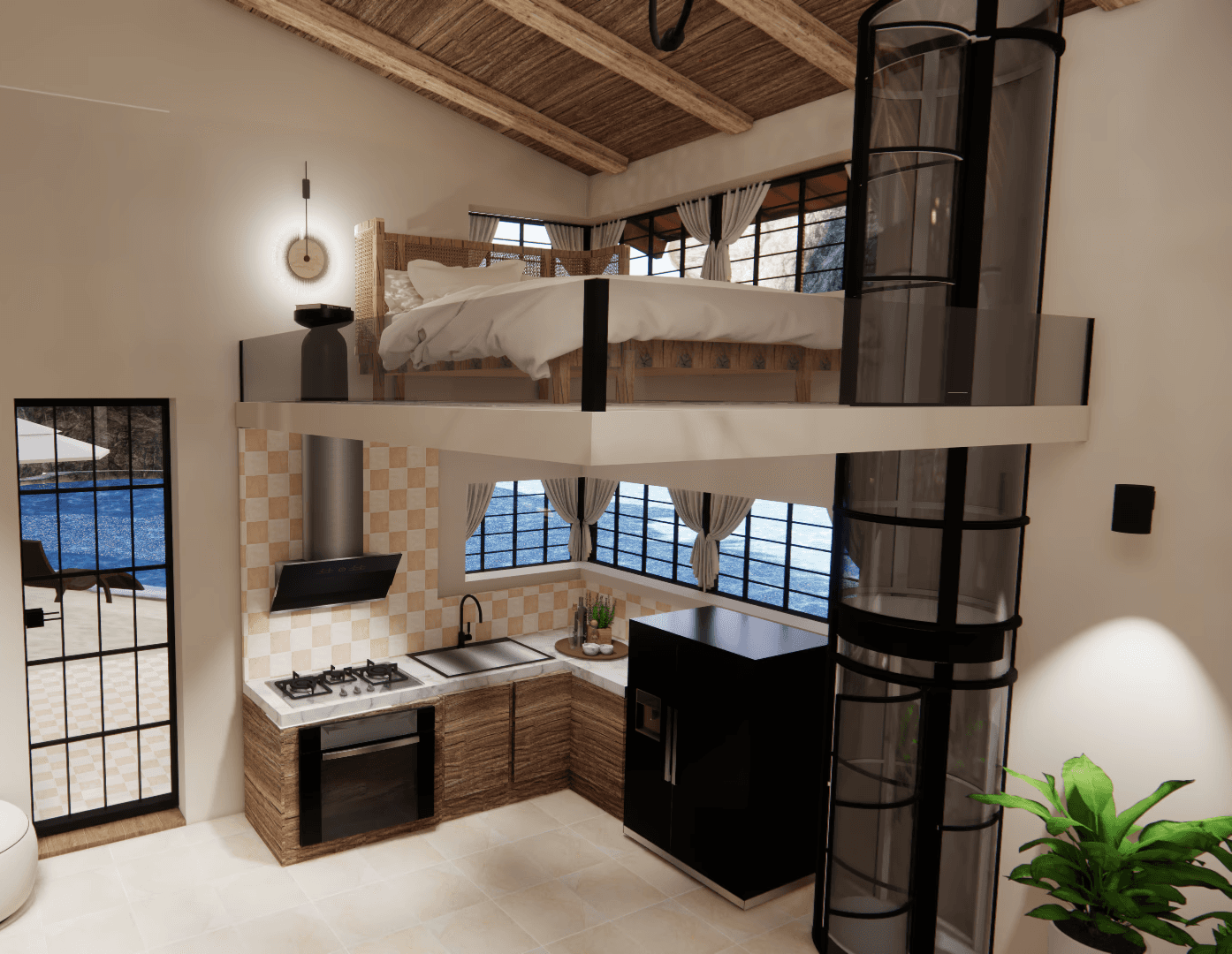
A vacuum elevator replaces stairs, allowing effortless movement between the loft bedroom and main living level. Its transparent cylindrical form preserves visual lightness and daylight penetration.
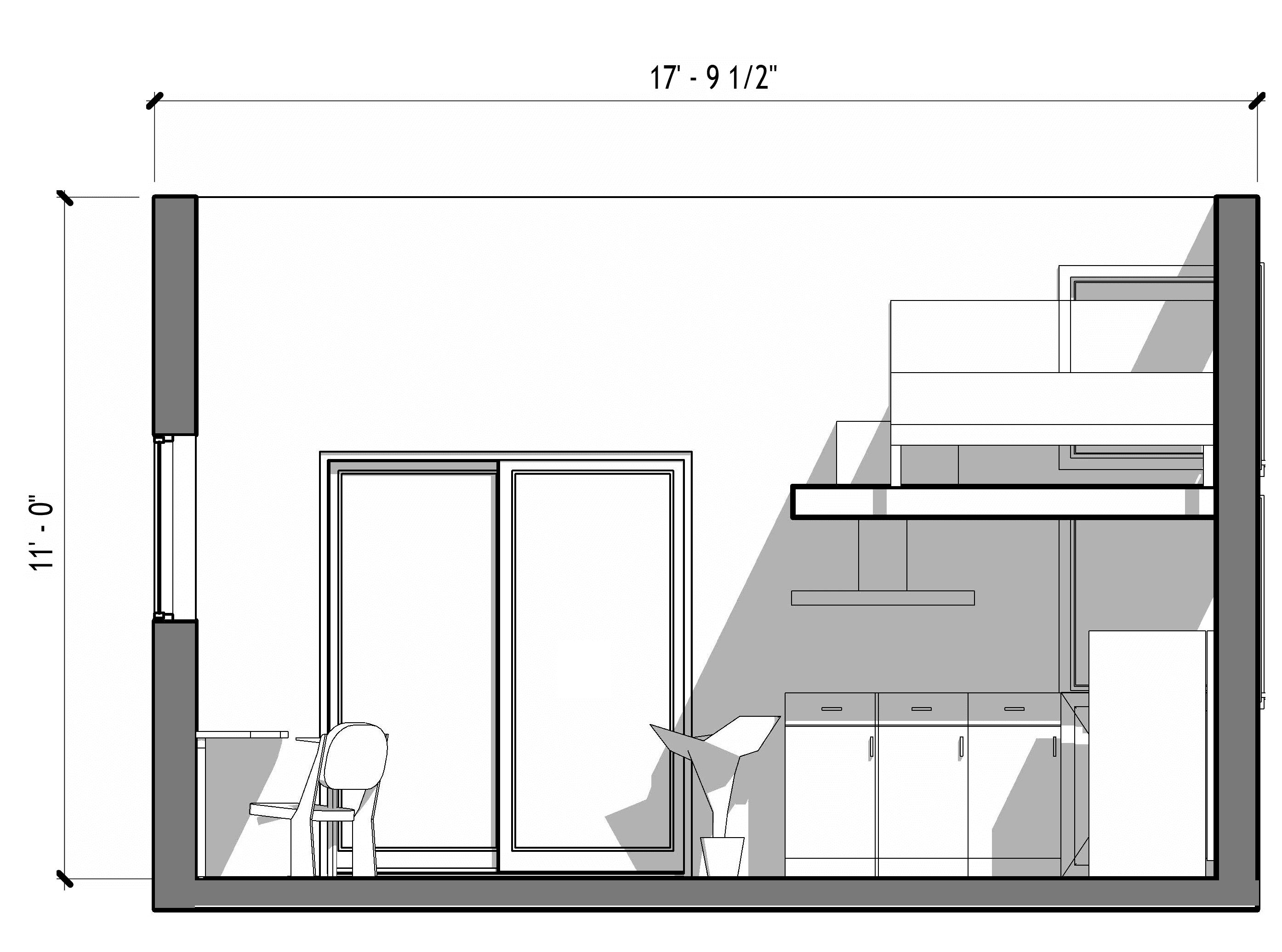
Wide circulation paths, soft rounded edges, and integrated storage reduce trip hazards and clutter. Counter heights, workstation placement, and clear movement paths are carefully scaled for long-term ease of use.
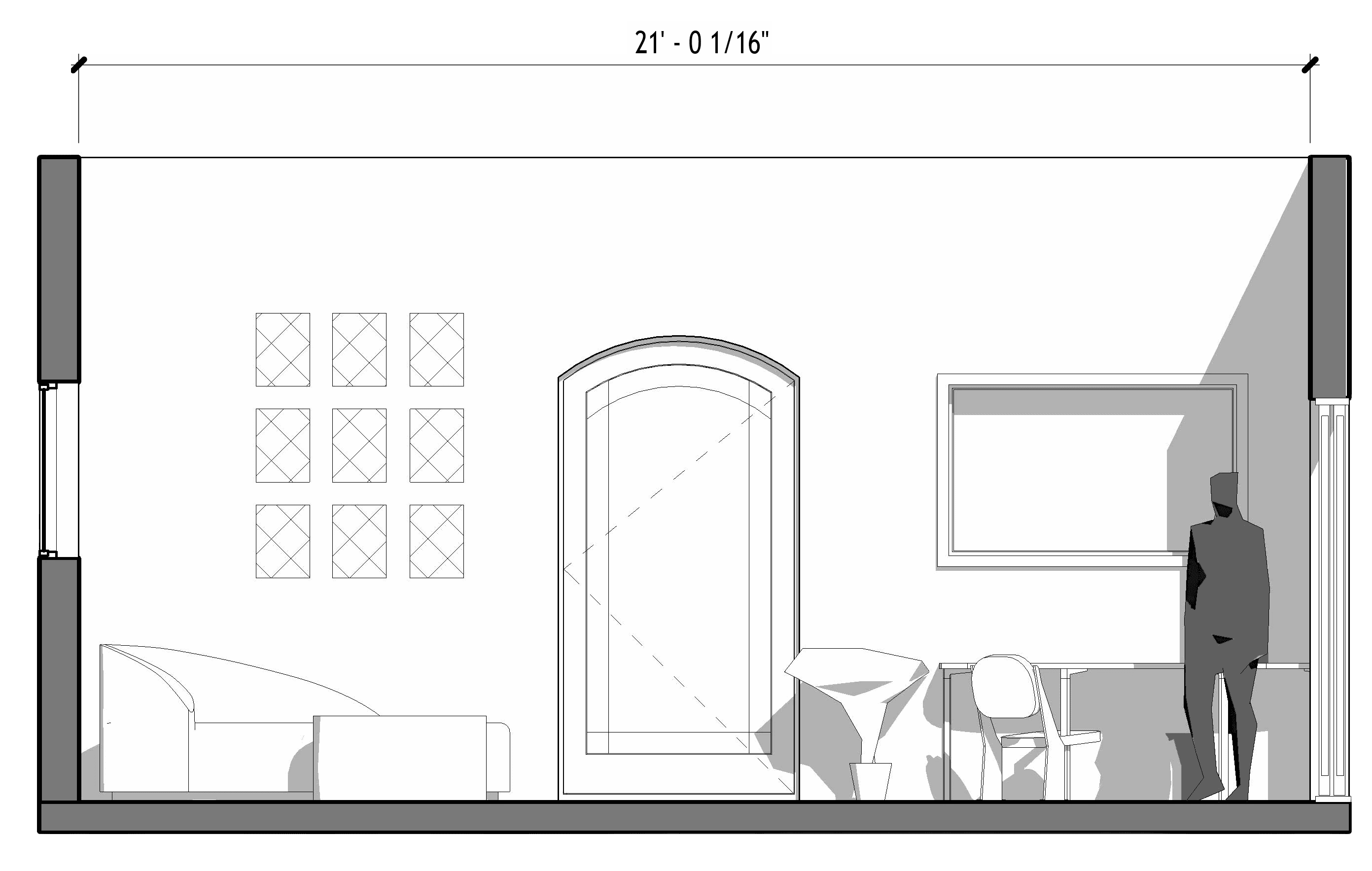
The sectional strategy maximizes daylight through skylights and high operable windows, promoting cross ventilation and thermal comfort in the coastal climate.
user journey.
Morning begins with natural light entering through high windows beside the loft bed. The elevator brings her gently to the main level, where the kitchen layout supports intuitive movement.
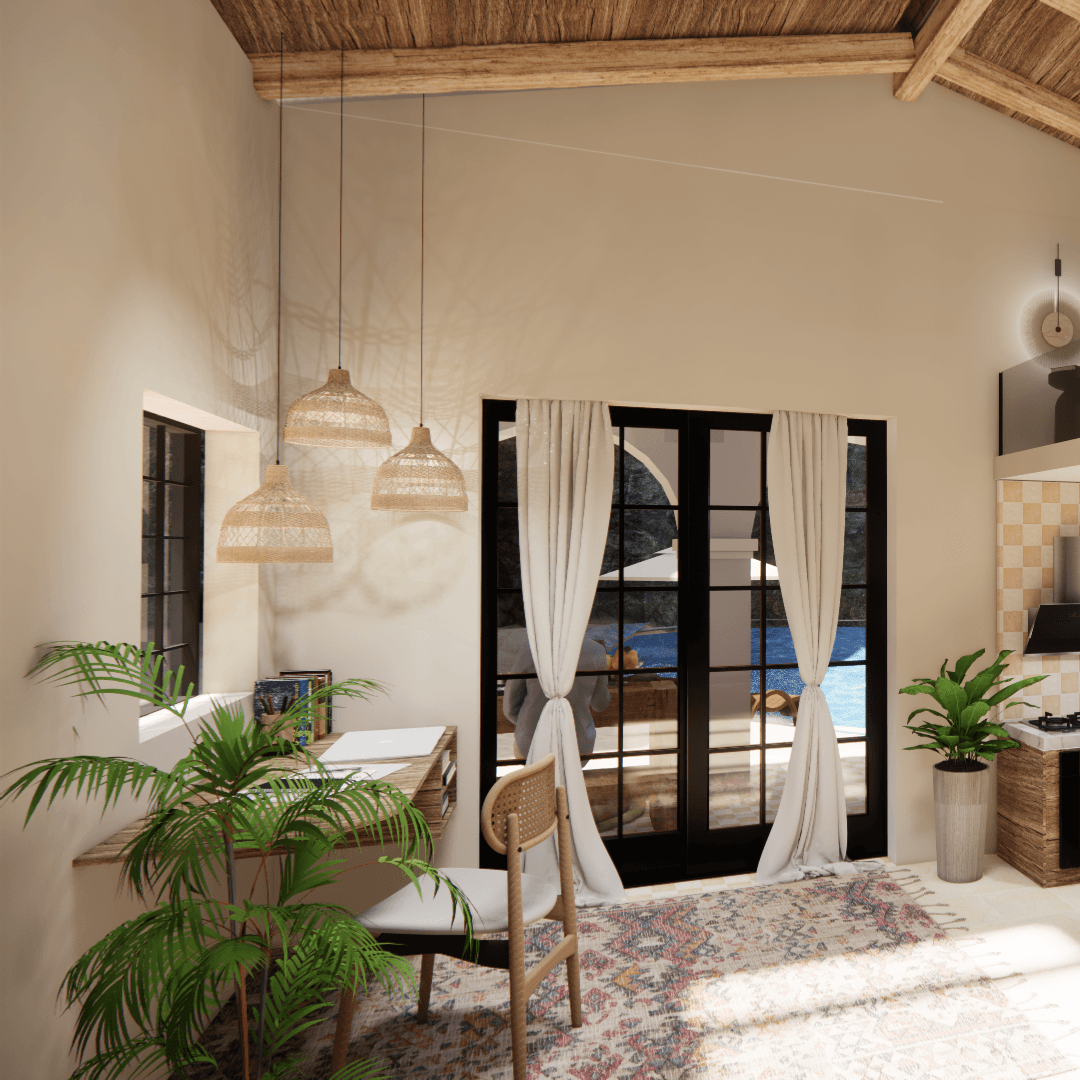
A built-in workstation positioned near operable windows allows for writing and light work with natural ventilation. Integrated storage keeps essentials within reach while maintaining visual calm.
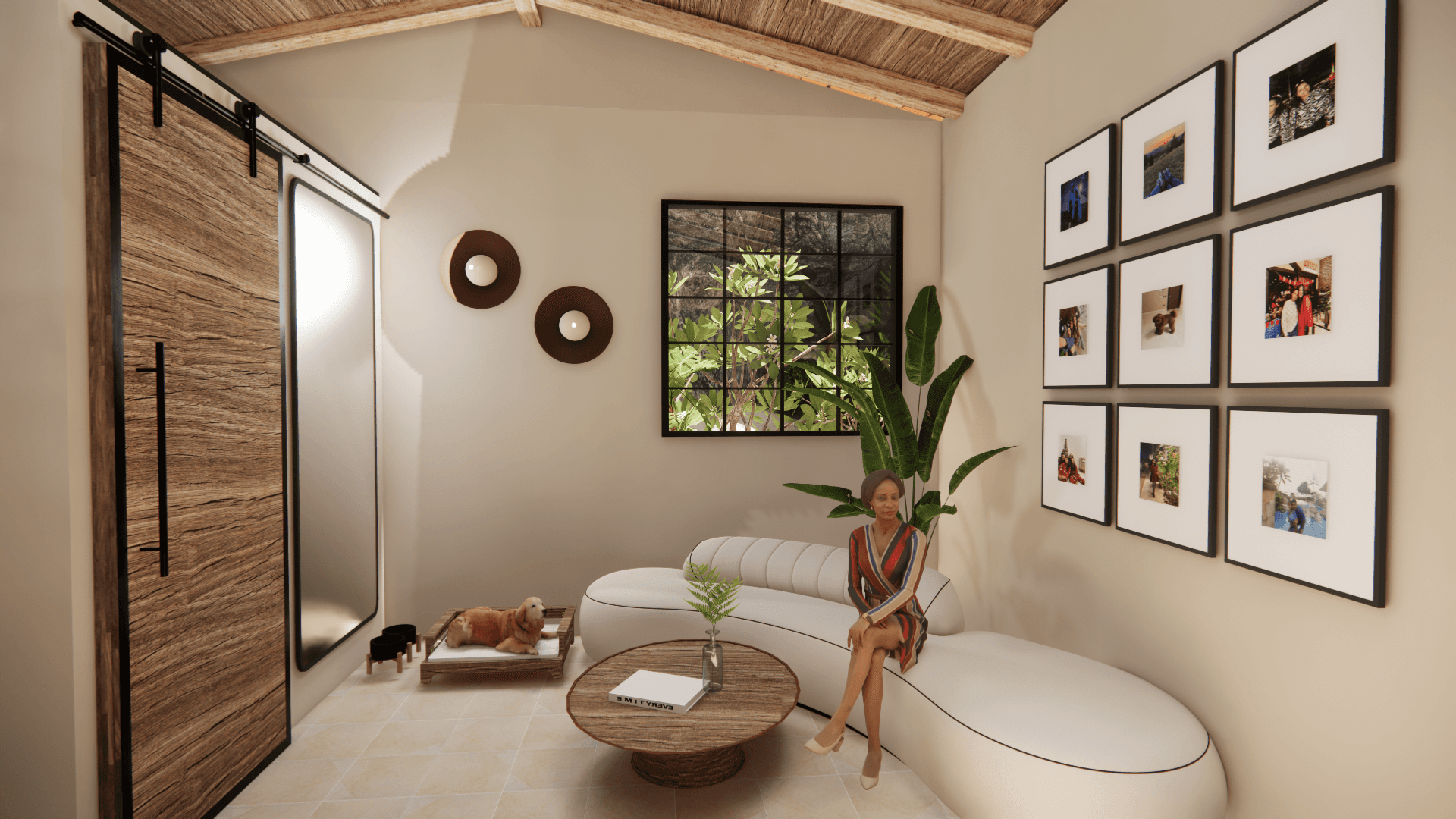
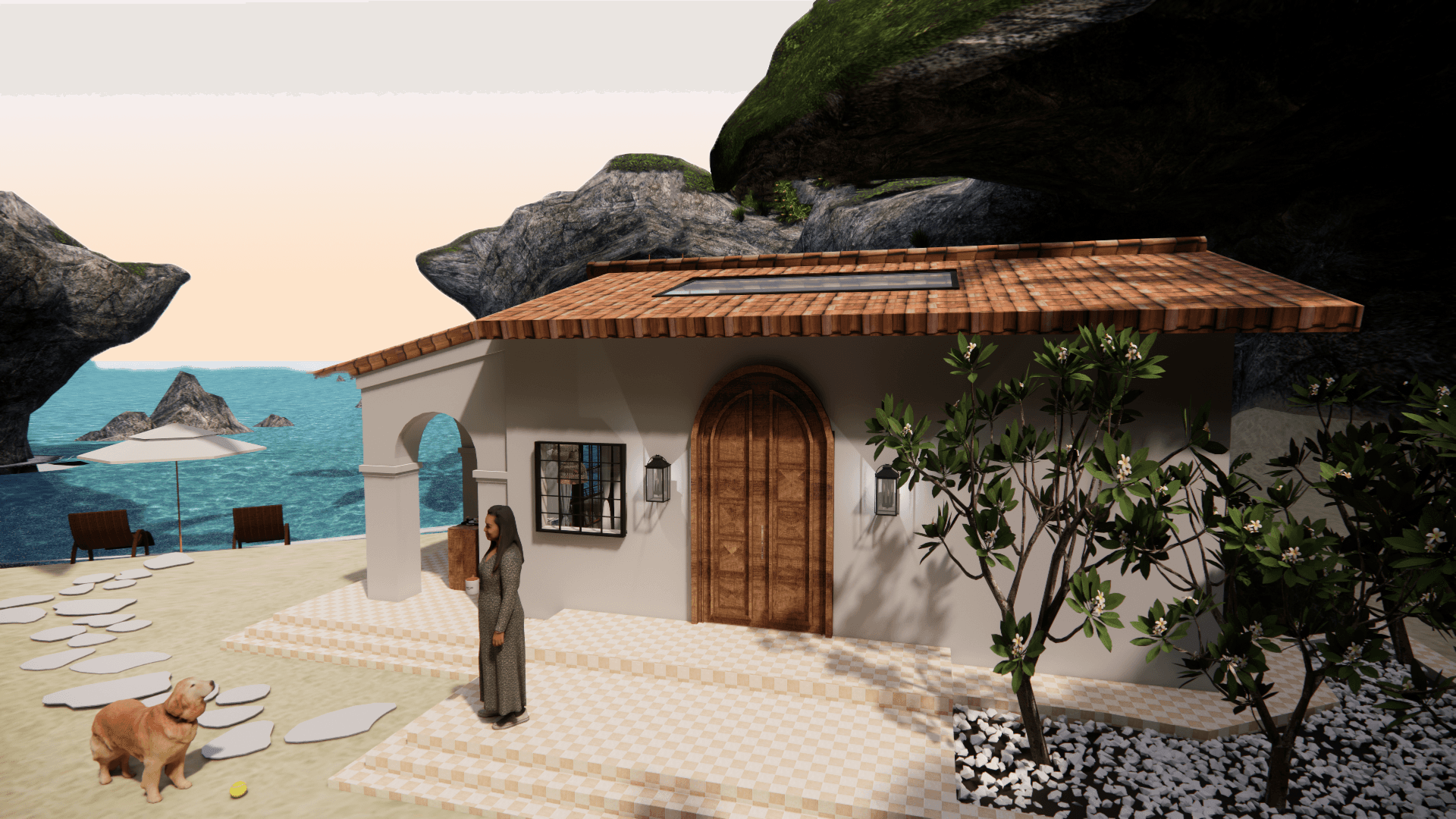
French doors open onto a beach terrace, creating a continuous flow between interior and landscape. Evenings transition outdoors - to sunset views, dinner on the porch, or quiet reflection - before returning to the loft under skylit coastal air.
material strategy.
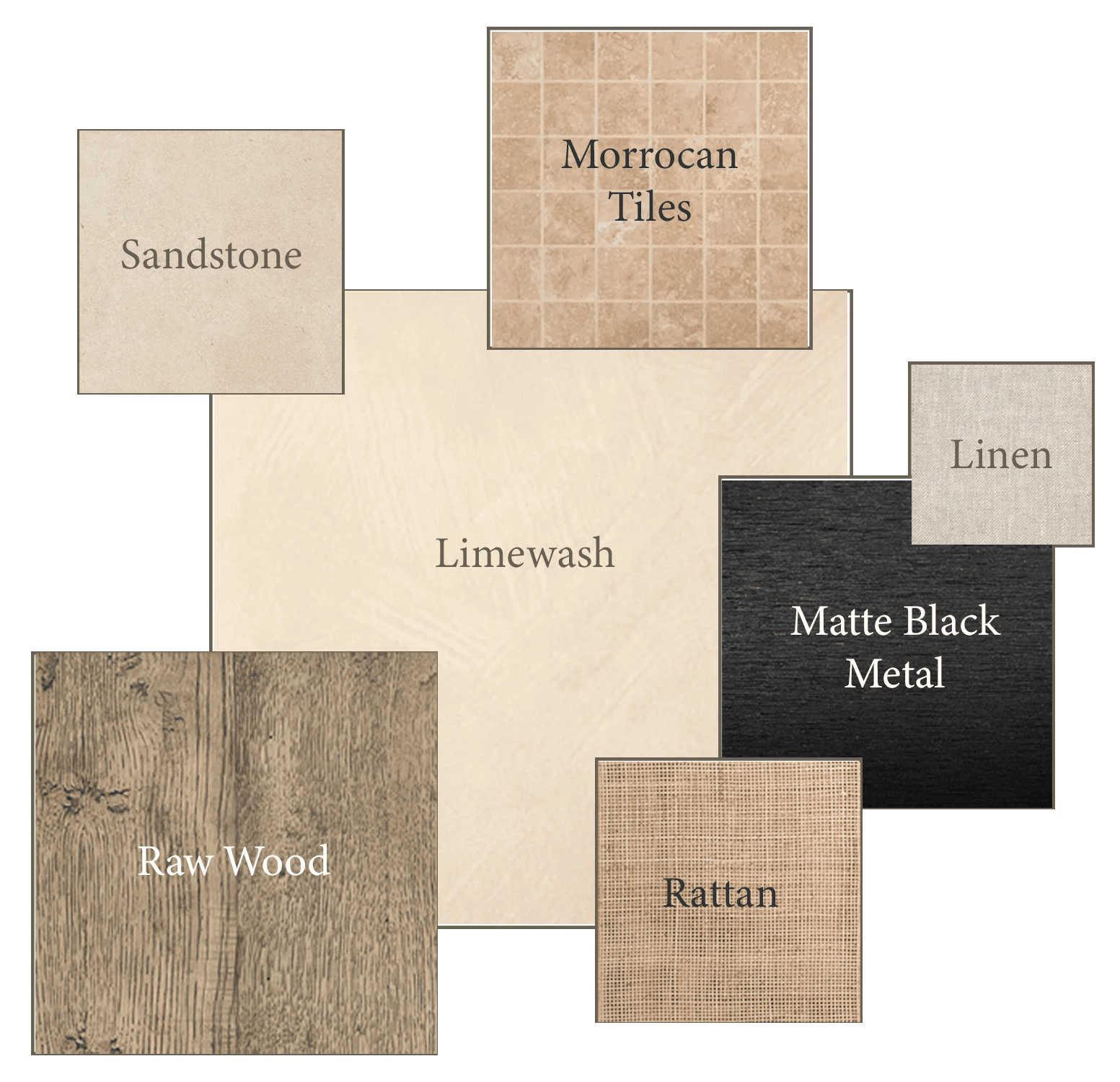
Every material was intentionally selected for sensory comfort, durability, and long-term performance.
Limewash walls and clay plaster create a breathable, warm interior envelope
Raw wood adds tactile softness and biophilic grounding
Non-slip sandstone and Moroccan tile ensure safety and thermal comfort
Linen and rattan provide airflow and lightness
Matte black metal offers visual definition, supporting aging eyes
Daylighting and cross ventilation reduce reliance on artificial systems. Solar panels, reclaimed materials, and native landscaping reinforce environmental responsibility.
Sustainability is expressed through passive strategy, material aging, and reduced spatial footprint.
final design.
Casa Solstice redefines tiny living as a resilient, elegant aging-in-place design. Through accessible planning, biophilic materiality, and seamless integration with its coastal context, the home supports independence without sacrificing beauty or spatial richness.
reflection.
This project taught me to design with time in mind and anticipate future needs of the users.